

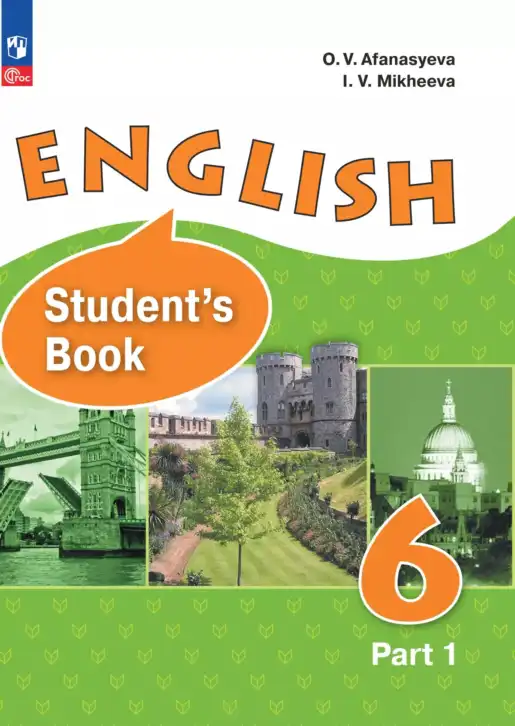
Учебник Английский язык Углубленный уровень для 6 класса от автора О.В. Афанасьевой и И.В. Михеевой – это популярное пособие, входящее в линейку УМК «Rainbow English». Он предназначен для детей, только начинающих изучать английский, и помогает сделать первые шаги в языке увлекательными и эффективными.
ГДЗ по Английскому языку 6 Класс Часть 2 Страница 94 Углубленный Уровень Афанасьева, Михеева — Подробные Ответы
a) Read and guess what the underlined words mean.
1. The Constitution [ˌkɒnstɪˈtjuːʃn] is the main law of the country.
2. When people elect their government, they take part in the election [ɪˈlɛkʃn].
3. A congress [ˈkɒŋɡrɛs] is a large meeting of people coming from different parts of the country. Congressmen and congresswomen are members of the US Congress.
4. The Senate [ˈsɛnɪt] is one of the houses in the US Congress. A senator [ˈsɛnətə] is a member of the law-making senate.
5. All the newspapers that are published in a country are called the Press [prɛs].
6. Religion [rɪˈlɪdʒən] is believing in God or gods.
7. A helper is someone who helps.
8. The vice-president [ˌvaɪs ˈprɛzɪdənt] in the US is elected together with the president of the country.
9. The Cabinet [ˈkæbɪnɪt] is a group of important ministers who help a president giving him advice on different problems.
10. I am sure everything will be all right, I can guarantee [ˌɡærənˈtiː] it.
11. Slavery [ˈsleɪvərɪ] is a system by which people (slaves) can be owned by other people.
b) Look these words up to make sure that you have guessed right.
a) Прочитайте и угадайте, что означают подчеркнутые слова. b) Посмотрите эти слова в словаре, чтобы убедиться, что вы угадали правильно.
Ответ:
1. Constitution — the main law of the country. / Конституция — основной закон страны.
2. election — the process of choosing a government by voting. / выборы — процесс избрания правительства путем голосования.
3. congress, Congressmen and congresswomen — a formal meeting or a legislative body; members of that body. / конгресс, Конгрессмены и конгрессвумен — официальное собрание или законодательный орган; члены этого органа.
4. The Senate, A senator — a legislative chamber; a member of that chamber. / Сенат, Сенатор — законодательная палата; член этой палаты.
5. the Press — newspapers and journalists viewed collectively. / Пресса — газеты и журналисты в совокупности.
6. Religion — the belief in and worship of a god or gods. / Религия — вера в бога или богов и поклонение им.
7. A helper — a person who helps someone with a task. / Помощник — человек, который помогает кому-либо с задачей.
8. The vice-president — an official or executive ranking below and deputizing for a president. / Вице-президент — должностное лицо или руководитель, занимающий второе место после президента и замещающий его.
9. The Cabinet — a group of advisors to a head of state. / Кабинет министров — группа советников главы государства.
10. guarantee — to promise that something will happen or is true. / гарантировать — обещать, что что-то произойдет или является правдой.
11. Slavery — a system where people can be owned by other people. / Рабство — система, при которой люди могут находиться в собственности у других людей.
- Constitution — the main law of the country.
Конституция — основной закон страны.
Explanation: The Constitution is the fundamental legal document that defines the structure of government and sets out the rights of citizens. It serves as the highest legal authority in a country. In English, «Constitution» refers to the system of laws and principles that govern a state or organization. - Election — the process of choosing a government by voting.
Выборы — процесс избрания правительства путем голосования.
Explanation: An election is a formal decision-making process in which citizens of a country vote to choose their leaders or government representatives. It’s a democratic process that enables the people to have a say in who governs them. «Election» involves campaigns, voting, and the determination of elected officials. - Congress, Congressmen and Congresswomen — a formal meeting or a legislative body; members of that body.
Конгресс, Конгрессмены и конгрессвумен — официальное собрание или законодательный орган; члены этого органа.
Explanation: «Congress» refers to a formal assembly or legislative body, particularly in countries like the United States, where it is responsible for making laws. «Congressmen» and «Congresswomen» are elected representatives who serve in this legislative body. - The Senate, A senator — a legislative chamber; a member of that chamber.
Сенат, Сенатор — законодательная палата; член этой палаты.
Explanation: The Senate is a legislative chamber in many countries, including the U.S., where senators make laws. A «senator» is a person elected to serve in the Senate and represent a state or region in the national legislature. - The Press — newspapers and journalists viewed collectively.
Пресса — газеты и журналисты в совокупности.
Explanation: «The Press» refers to the collective group of newspapers, magazines, and journalists that report on news and public affairs. It is an essential part of media and communication, often holding the government and powerful institutions accountable by sharing information with the public. - Religion — the belief in and worship of a god or gods.
Религия — вера в бога или богов и поклонение им.
Explanation: Religion involves systems of belief and practices related to the divine, gods, or spiritual beings. It often includes rituals, moral codes, and teachings that guide people’s behavior and provide meaning to their lives. It can be monotheistic (belief in one god) or polytheistic (belief in multiple gods). - A helper — a person who helps someone with a task.
Помощник — человек, который помогает кому-либо с задачей.
Explanation: A «helper» is someone who provides assistance, support, or aid to another person in completing a task or solving a problem. Helpers are typically employed in various fields such as education, healthcare, or business, and they offer practical assistance to others. - The vice-president — an official or executive ranking below and deputizing for a president.
Вице-президент — должностное лицо или руководитель, занимающий второе место после президента и замещающий его.
Explanation: The vice-president is the second-highest official in a government, usually directly beneath the president. The vice-president’s role includes stepping in to perform presidential duties when the president is unable to, and taking over if the president leaves office. - The Cabinet — a group of advisors to a head of state.
Кабинет министров — группа советников главы государства.
Explanation: The Cabinet is a body of high-ranking government officials who are appointed by the head of state (such as a president or prime minister) to advise them on various matters of governance and policy. The Cabinet typically consists of ministers responsible for specific areas such as defense, finance, and education. - Guarantee — to promise that something will happen or is true.
Гарантировать — обещать, что что-то произойдет или является правдой.
Explanation: A «guarantee» is a formal assurance that certain conditions will be fulfilled, or a promise that something will occur as expected. In law, guarantees often serve as a safety measure for consumers, ensuring that products or services will meet specific standards or be replaced if faulty. - Slavery — a system where people can be owned by other people.
Рабство — система, при которой люди могут находиться в собственности у других людей.
Explanation: Slavery is a system where individuals are considered property of another person and are forced to work without freedom or compensation. Historically, it has existed in many societies and has been a severe violation of human rights, with people being exploited and oppressed.
Read the words, look them up and study the word combinations and sentences to know how to use them.
a representative [reprɪ’zentətɪv] (n): an important representative, representatives of the country, people’s representatives. In the group of tourists there were representatives of many cities.
to represent [reprɪ’zent] (v): to represent sb at the conference (meeting, competition). Who is going to represent your class at the competition?
a trunk [trʌŋk] (n): 1. the trunk of a tree. I sat down on a fallen tree trunk. A hole in the trunk of a big tree was a good home for the squirrel and her young. 2. an elephant’s trunk. With the help of its trunk an elephant takes food and water and puts them to its mouth.
support [sə’pɔ:t] (n): your friends’ support. Will you help me? I need your support.
to support (v): to support sb in sth. Will you support me in the argument? He said he wanted to go to the zoo but nobody supported him.
to obey [ə’beɪ] (v): to obey the rules, to obey orders. They obeyed me without a question. Do you always obey your parents?
a term [tɜ:m] (n): 1. a school term, a college term. You are going to have a lot of English classes this term. 2. A term is a period of time between two elections when a certain president or a political party is in power.
an amendment [ə’mendmənt] (n): an amendment to the Constitution; to make amendments. Changes in the Constitution are called amendments.
to declare [dɪ’kleə] (v): to declare war on a country, to declare the meeting open, to declare one’s loyalty to the country. Germany didn’t declare war on Russia in 1941. Jack was declared the winner of the fight. I now declare this meeting open.
a bill [bɪl] (n): 1. a hotel bill, a restaurant bill, an electricity bill. The bill for dinner was over twelve dollars. Last month my family got a large telephone bill. 2. a bill of parliament, the Bill of Rights, to pass a bill, to defeat a bill. The American Congress has just passed a new bill on education. The job of any parliament is to study bills and either pass or defeat them.
a decision [dɪ’sɪʒn] (n): an important decision, the right decision, the wrong decision, to take/make a decision. I think that I made the wrong decision. It isn’t always easy to make a decision.
to vote [voʊt] (v): to vote for/against something. When you vote, you make your choice or give your opinion by raising your hand or writing on a piece of paper. The people voted «yes» on the referendum [refə’rendəm].
a court [kɔ:t] (n): the Supreme Court. Silence in court! Her case1 will be heard in the court.
to judge [dʒʌdʒ] (v): to judge a case, to judge a competition, to judge the dogs at a dog show, as far as I can judge, it’s difficult to judge, judging by… Who will judge the next case? Judging by what everyone says about him, he will win the race.
a judge (n): a court judge, Judge Simpson, a judge at the competitions, a judge of music, a judge of poetry. She is a good judge of character. I’m no judge of music but I know what I like.
a citizen [‘sɪtɪzn] (n): an American citizen, citizens of Moscow. She is a British citizen but lives in India. When did he become a US citizen?
no matter how (what, where, when, who, why) means that it makes no difference how (what, where, when, who, why). I’ll finish the job, no matter how long it takes. I’ll go there, no matter what you may say.
all in all means taken together. All in all we spent ten days travelling in Italy.
armed forces are the military forces of the country. What can you say about the British armed forces?
a representative [reprɪ’zentətɪv] (n): представитель — важный представитель, представители страны, народные представители. В группе туристов были представители многих городов.
to represent [reprɪ’zent] (v): представлять кого-либо на конференции (встречах, соревнованиях). Кто будет представлять ваш класс на соревнованиях?
a trunk [trʌŋk] (n): 1. ствол дерева. Я присел на упавший ствол дерева. Дыра в стволе большого дерева была хорошим домом для белки и ее детенышей. 2. хобот слона. С помощью хобота слон берет еду и воду и кладет их в рот.
support [sə’pɔ:t] (n): поддержка ваших друзей. Ты поможешь мне? Мне нужна твоя поддержка.
to support (v): поддерживать кого-либо в чем-либо. Ты поддержишь меня в споре? Он сказал, что хочет пойти в зоопарк, но никто его не поддержал.
to obey [ə’beɪ] (v): подчиняться правилам, подчиняться приказам. Они подчинялись мне без вопросов. Ты всегда слушаешься своих родителей?
a term [tɜ:m] (n): 1. школьная четверть, учебный семестр. Ты будешь учиться на английском языке в этом семестре. 2. срок — период времени между двумя выборами, когда определенный президент или политическая партия находится у власти.
an amendment [ə’mendmənt] (n): поправка к Конституции; вносить поправки. Изменения в Конституцию называются поправками.
to declare [dɪ’kleə] (v): объявить войну другой стране, объявить собрание открытым, заявить о своей лояльности к стране. Германия не объявила войну России в 1941 году. Джек был объявлен победителем в бою. Я объявляю это собрание открытым.
a bill [bɪl] (n): 1. счет в отеле, счет в ресторане, счет за электричество. Счет за ужин составил больше двенадцати долларов. В прошлом месяце моя семья получила большой счет за телефон. 2. законопроект парламента, Билль о правах, принимать законопроект, отклонять законопроект. Американский Конгресс только что принял новый законопроект об образовании. Задача любого парламента — изучать законопроекты и либо принимать, либо отклонять их.
a decision [dɪ’sɪʒn] (n): важное решение, правильное решение, неправильное решение, принимать/принимать решение. Я думаю, что принял неправильное решение. Принять решение бывает не всегда просто.
to vote [voʊt] (v): голосовать за/против чего-либо. Когда вы голосуете, вы делаете выбор или высказываете свое мнение, поднимая руку или записывая на бумаге. Люди проголосовали «за» на референдуме.
a court [kɔ:t] (n): Верховный суд. Тишина в суде! Ее дело будет рассмотрено в суде.
to judge [dʒʌdʒ] (v): судить дело, судить конкурс, судить собак на выставке, насколько я могу судить, это трудно судить, судя по… Кто будет судить следующее дело? Судя по тому, что все говорят о нем, он выиграет гонку.
a judge (n): судья в суде, судья Симпсон, судья на конкурсах, судья по музыке, судья по поэзии. Она — хороший судья характера. Я не судья музыки, но я знаю, что мне нравится.
a citizen [‘sɪtɪzn] (n): гражданин Америки, граждане Москвы. Она британская гражданка, но живет в Индии. Когда он стал гражданином США?
no matter how (what, where, when, who, why) означает, что не имеет значения, как (что, где, когда, кто, почему). Я закончу работу, не важно, сколько времени это займет. Я пойду туда, не важно, что ты скажешь.
all in all означает в целом. В целом мы провели десять дней, путешествуя по Италии.
armed forces — это военные силы страны. Что ты можешь сказать о британских вооруженных силах?
1. a representative [reprɪ’zentətɪv] (n):
Представитель — важный представитель, представители страны, народные представители.
В группе туристов были представители многих городов.
Explanation: A representative is someone chosen to speak or act on behalf of a group, such as a country or organization. Representatives are often elected or appointed to represent the interests of others. In this context, it refers to someone representing a specific city in a group of tourists.
2. to represent [reprɪ’zent] (v):
Представлять кого-либо на конференции (встречах, соревнованиях).
Кто будет представлять ваш класс на соревнованиях?
Explanation: To represent means to act on behalf of someone or a group, especially in formal settings like conferences, meetings, or competitions. It often involves speaking for others or making decisions for them. In this sentence, it refers to someone speaking or acting on behalf of the class at a competition.
3. a trunk [trʌŋk] (n):
- Ствол дерева.
Я присел на упавший ствол дерева. Дыра в стволе большого дерева была хорошим домом для белки и ее детенышей. - Хобот слона.
С помощью хобота слон берет еду и воду и кладет их в рот.
Explanation: The word «trunk» can refer to two things: a tree trunk, which is the main stem of a tree, and an elephant’s trunk, which is the long, flexible nose of the animal. In both cases, it refers to something large and central to the structure.
4. support [sə’pɔ:t] (n):
Поддержка ваших друзей.
Ты поможешь мне? Мне нужна твоя поддержка.
Explanation: Support refers to assistance or encouragement that one person provides to another. It can also refer to the help given in difficult situations, whether emotional, physical, or financial.
5. to support [sə’pɔ:t] (v):
Поддерживать кого-либо в чем-либо.
Ты поддержишь меня в споре? Он сказал, что хочет пойти в зоопарк, но никто его не поддержал.
Explanation: To support someone means to give them help or approval, whether it’s emotionally, financially, or in decision-making. It can involve backing someone’s decisions or actions.
6. to obey [ə’beɪ] (v):
Подчиняться правилам, подчиняться приказам.
Они подчинялись мне без вопросов. Ты всегда слушаешься своих родителей?
Explanation: To obey means to follow the instructions, orders, or rules set by someone in authority. It involves compliance and respect for guidance or direction.
7. a term [tɜ:m] (n):
- Школьная четверть, учебный семестр.
Ты будешь учиться на английском языке в этом семестре. - Срок — период времени между двумя выборами, когда определенный президент или политическая партия находится у власти.
Explanation: A term can refer to a period of time in school or university, as well as the period between elections in political contexts. It’s used to describe a specific duration during which something happens or is valid.
8. an amendment [ə’mendmənt] (n):
Поправка к Конституции; вносить поправки.
Изменения в Конституцию называются поправками.
Explanation: An amendment is a formal change or addition to a law or document, especially a constitution. Amendments are often proposed to improve or update laws or to address changing circumstances.
9. to declare [dɪ’kleə] (v):
Объявить войну другой стране, объявить собрание открытым, заявить о своей лояльности к стране.
Германия не объявила войну России в 1941 году. Джек был объявлен победителем в бою. Я объявляю это собрание открытым.
Explanation: To declare means to formally announce or state something publicly. It can refer to declarations in official contexts, such as declaring war, opening a meeting, or expressing loyalty.
10. a bill [bɪl] (n):
- Счет в отеле, счет в ресторане, счет за электричество.
Счет за ужин составил больше двенадцати долларов. В прошлом месяце моя семья получила большой счет за телефон. - Законопроект парламента, Билль о правах, принимать законопроект, отклонять законопроект.
Американский Конгресс только что принял новый законопроект об образовании.
Explanation: A bill can refer to a document that outlines charges for goods or services (like a restaurant bill) or a proposed law that is presented for discussion and approval in a legislative body.
11. a decision [dɪ’sɪʒn] (n):
Важное решение, правильное решение, неправильное решение, принимать/принимать решение.
Я думаю, что принял неправильное решение. Принять решение бывает не всегда просто.
Explanation: A decision is a conclusion or choice made after considering different options. It is the result of thinking through a problem or situation.
12. to vote [voʊt] (v):
Голосовать за/против чего-либо.
Когда вы голосуете, вы делаете выбор или высказываете свое мнение, поднимая руку или записывая на бумаге.
Explanation: To vote means to express a choice or opinion in an official way, often in a democratic process like elections or referendums. Voting can be done by raising a hand, writing on a ballot, etc.
13. a court [kɔ:t] (n):
Верховный суд. Тишина в суде! Ее дело будет рассмотрено в суде.
Explanation: A court is a place where legal cases are heard and decided. It can also refer to the judiciary system as a whole, including judges and the laws that govern legal matters.
14. to judge [dʒʌdʒ] (v):
Судить дело, судить конкурс, судить собак на выставке.
Кто будет судить следующее дело? Судя по тому, что все говорят о нем, он выиграет гонку.
Explanation: To judge means to assess or make a decision about something, whether it’s a legal case, competition, or event. It involves evaluating various factors and making a decision based on them.
15. a judge [dʒʌdʒ] (n):
Судья в суде, судья Симпсон, судья на конкурсах.
Она — хороший судья характера. Я не судья музыки, но я знаю, что мне нравится.
Explanation: A judge is someone who presides over a legal case or competition, making decisions based on the evidence or performance presented. In some contexts, judges can specialize in certain areas, like music or literature.
16. a citizen [‘sɪtɪzn] (n):
Гражданин Америки, граждане Москвы.
Она британская гражданка, но живет в Индии. Когда он стал гражданином США?
Explanation: A citizen is a person who legally belongs to a particular country and has certain rights and responsibilities, including voting, paying taxes, and following the country’s laws.
17. no matter how (what, where, when, who, why):
Означает, что не имеет значения, как (что, где, когда, кто, почему).
Я закончу работу, не важно, сколько времени это займет. Я пойду туда, не важно, что ты скажешь.
Explanation: «No matter how» and similar expressions indicate that the outcome will not be affected by the specific circumstances or factors mentioned. It emphasizes determination or certainty.
18. all in all:
Означает в целом. В целом мы провели десять дней, путешествуя по Италии.
Explanation: «All in all» is used to summarize something or to describe the general picture or outcome. It combines all aspects of a situation to give a complete or final perspective.
19. armed forces:
Военные силы страны. Что ты можешь сказать о британских вооруженных силах?
Explanation: Armed forces refer to the military forces of a country, including the army, navy, and air force. They are responsible for defending the country and maintaining security.

Оставь свой отзыв 💬
Комментариев пока нет, будьте первым!