

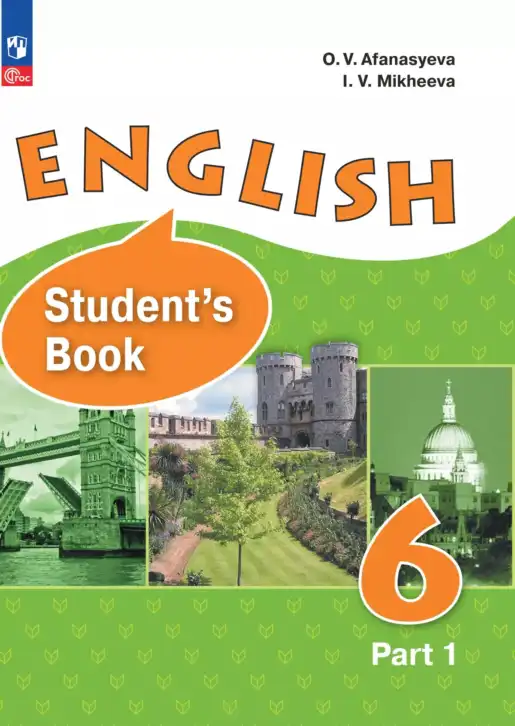
Учебник Английский язык Углубленный уровень для 6 класса от автора О.В. Афанасьевой и И.В. Михеевой – это популярное пособие, входящее в линейку УМК «Rainbow English». Он предназначен для детей, только начинающих изучать английский, и помогает сделать первые шаги в языке увлекательными и эффективными.
ГДЗ по Английскому языку 6 Класс Часть 2 Страница 8 Углубленный Уровень Афанасьева, Михеева — Подробные Ответы
Express the same in English.
1. Никто не хочет, чтобы он сделал всю эту работу один.
2. Я ожидаю, что ваши друзья помогут вам сделать (make) карту Британских островов.
3. Алисе хотелось бы, чтобы учителя были добрыми.
4. Красная Шапочка не ожидала, что Волк побежит к домику бабушки.
5. Мы хотели, чтобы вам было удобно.
6. Ей не хотелось бы, чтобы мы давали ей советы.
7. Я не ожидаю, что они вернутся рано: дорога дальняя (it’s a long way).
8. Мои родители не хотят, чтобы я читал в постели.
9. Детям хотелось бы, чтобы он показал им новый фильм.
10. Я не хочу, чтобы она сделала (make) эту ошибку ещё раз.
Выразите то же самое на английском языке.
Ответ:
1. Nobody wants him to do all this work alone. — Никто не хочет, чтобы он делал всю эту работу один.
2. I expect your friends to help you make a map of the British Isles. — Я ожидаю, что ваши друзья помогут вам сделать карту Британских островов.
3. Alice would like the teachers to be kind. — Алисе хотелось бы, чтобы учителя были добрыми.
4. Little Red Riding Hood did not expect the Wolf to run to her grandmother’s house. — Красная Шапочка не ожидала, что Волк побежит к домику бабушки.
5. We wanted you to be comfortable. — Мы хотели, чтобы вам было удобно.
6. She wouldn’t like us to give her advice. — Ей не хотелось бы, чтобы мы давали ей советы.
7. I don’t expect them to return early: it’s a long way. — Я не ожидаю, что они вернутся рано: дорога дальняя.
8. My parents don’t want me to read in bed. — Мои родители не хотят, чтобы я читал в постели.
9. The children would like him to show them a new film. — Детям хотелось бы, чтобы он показал им новый фильм.
10. I don’t want her to make this mistake again. — Я не хочу, чтобы она сделала эту ошибку ещё раз.
1. Nobody wants him to do all this work alone.
Никто не хочет, чтобы он делал всю эту работу один.
- Explanation: This sentence expresses that no one desires for him to handle the entire task by himself. It reflects concern about the burden or the difficulty of completing the work alone. The structure «wants him to do» is used to indicate someone’s wish or expectation regarding another person’s actions.
2. I expect your friends to help you make a map of the British Isles.
Я ожидаю, что ваши друзья помогут вам сделать карту Британских островов.
- Explanation: The speaker is indicating their expectation that the friends will assist with the task of making a map. «Expect» here suggests a reasonable belief that the friends will help, which is based on the situation or context.
3. Alice would like the teachers to be kind.
Алисе хотелось бы, чтобы учителя были добрыми.
- Explanation: Alice expresses a polite wish for the teachers to be kind. «Would like» indicates a desire that is not urgent but reflects a hope or preference. This is a common way to express polite wishes.
4. Little Red Riding Hood did not expect the Wolf to run to her grandmother’s house.
Красная Шапочка не ожидала, что Волк побежит к домику бабушки.
- Explanation: This sentence indicates that Little Red Riding Hood was surprised by the wolf’s actions. «Did not expect» suggests that she was unprepared for the wolf to behave in this way, and it implies an element of surprise or disbelief.
5. We wanted you to be comfortable.
Мы хотели, чтобы вам было удобно.
- Explanation: The speaker expresses their wish or intention for the other person to feel at ease. «Wanted» suggests a past desire, and the phrase «you to be comfortable» emphasizes the speaker’s intention for the person’s well-being.
6. She wouldn’t like us to give her advice.
Ей не хотелось бы, чтобы мы давали ей советы.
- Explanation: The speaker conveys that she does not desire for advice to be given to her. «Wouldn’t like» expresses a polite refusal or a dislike for something happening, in this case, giving advice.
7. I don’t expect them to return early: it’s a long way.
Я не ожидаю, что они вернутся рано: дорога дальняя.
- Explanation: The speaker indicates that they do not anticipate an early return due to the long journey. «Don’t expect» suggests a realistic belief that the return will take time, considering the circumstances (the distance).
8. My parents don’t want me to read in bed.
Мои родители не хотят, чтобы я читал в постели.
- Explanation: The speaker’s parents are expressing a preference or rule about not reading in bed. «Don’t want» shows a desire or expectation that the child refrains from this action, possibly for health or comfort reasons.
9. The children would like him to show them a new film.
Детям хотелось бы, чтобы он показал им новый фильм.
- Explanation: The children express a polite wish for someone to show them a new film. «Would like» is used here to show their desire, indicating it’s a request or hope, rather than a command.
10. I don’t want her to make this mistake again.
Я не хочу, чтобы она сделала эту ошибку ещё раз.
- Explanation: The speaker expresses their desire for the other person not to repeat a mistake. «Don’t want» shows a clear wish to avoid the error being made again. The phrase implies concern for the person and the consequences of repeating the mistake.
a) Read and guess what the underlined words mean.
1. He makes gloves. He is a glove-maker [‘glʌv,meɪkə].
2. Their company [‘kʌmpənɪ] was not big. There were four of them. The Royal Shakespeare Company is well-known all over the world.
3. Young people from 13 to 19 years old are called teenagers [‘ti:n,eɪdʒəz].
4. He has not done anything criminal [‘krɪmɪnəl]. He is not a criminal. Prison is a place for punishing criminals. He is the country’s most wanted criminal.1
5. Would you like a book of poetry [‘pəʊɪtrɪ] for your birthday?
b) Look these words up to make sure that you have guessed right.
а) Прочитайте и угадайте, что означают подчеркнутые слова. б) Проверьте эти слова по словарю, чтобы убедиться, что вы угадали правильно.
Ответ:
a)
1. glove-maker — a person who makes gloves. / glove-maker — перчаточник, человек, который делает перчатки.
2. company — a group of people who work together to make or sell things. / company — компания, фирма.
3. teenagers — young people between 13 and 19 years old. / teenagers — подростки.
4. criminal (adjective) — relating to crime. criminal (noun) — a person who commits a crime. / criminal (прилагательное) — преступный. criminal (существительное) — преступник.
5. poetry — poems in general as a form of literature. / poetry — поэзия, стихи.
b)
I have looked these words up in a dictionary and my guesses were correct. / Я проверил эти слова по словарю, и мои догадки оказались верными.
a) Guess the meaning of the underlined words:
1. glove-maker
- Guess: A glove-maker is a person who makes gloves.
- Explanation: The word «maker» indicates that this person is someone who creates or manufactures something, and «glove» refers to the item they make. So, a glove-maker would be someone whose job is to craft or produce gloves.
- Correct meaning: glove-maker is indeed a person who makes gloves. In Russian, it translates to перчаточник.
2. company
- Guess: A company is a group of people who work together to make or sell things.
- Explanation: The word «company» refers to an organized group of people, often a business or corporation, that produces or sells products or services. It implies collaboration among individuals with a common goal.
- Correct meaning: company is indeed a group of people working together for commercial purposes. In Russian, it translates to компания, фирма.
3. teenagers
- Guess: Teenagers are young people between 13 and 19 years old.
- Explanation: The term «teenager» refers to individuals who are in the age range of adolescence, typically between the ages of 13 and 19. It’s derived from the numbers 13 to 19, which all end in «teen.»
- Correct meaning: teenagers indeed refers to young people between 13 and 19. In Russian, it translates to подростки.
4. criminal (adjective)
- Guess: Criminal (adjective) means something related to crime.
- Explanation: As an adjective, criminal describes something that involves or pertains to crime. For example, «criminal behavior» refers to actions that break the law.
- Correct meaning: criminal as an adjective indeed means relating to crime. In Russian, it translates to преступный.
5. Criminal (noun)
- Guess: A criminal is a person who commits a crime.
- Explanation: As a noun, criminal refers to someone who commits illegal acts or crimes, such as a thief, robber, or murderer.
- Correct meaning: criminal as a noun indeed refers to a person who commits a crime. In Russian, it translates to преступник.
6. poetry
- Guess: Poetry refers to poems in general as a form of literature.
- Explanation: Poetry is a literary form that involves writing poems, which are often characterized by their rhythm, rhyme, and expressive language. It represents a broad category of artistic expression through words.
- Correct meaning: poetry indeed refers to poems as a form of literature. In Russian, it translates to поэзия, стихи.
b) Check these words in the dictionary to make sure your guesses are correct:
- Sentence: «I have looked these words up in a dictionary and my guesses were correct.»
- Explanation: The phrase means that the speaker has verified the meanings of the words by checking a reliable source (like a dictionary) and confirms that their initial guesses about the words’ meanings were accurate.
Summary:
You correctly guessed the meanings of all the underlined words. The process of guessing involves identifying context clues, the structure of the word, and general knowledge. Verifying those guesses with a dictionary ensures the accuracy of your understanding. All of your guesses were correct, and the words match their standard definitions in both English and Russian.
a) Угадайте значение подчеркнутых слов:
- glove-maker
Догадка: Перчаточник — это человек, который делает перчатки.
Объяснение: Слово «maker» указывает на то, что этот человек создает или производит что-то, а «glove» относится к предмету, который он делает. Таким образом, glove-maker — это человек, чья работа заключается в изготовлении перчаток.
Правильное значение: glove-maker действительно означает человека, который делает перчатки. На русский переводится как перчаточник. - company
Догадка: Company — это группа людей, которые работают вместе, чтобы производить или продавать товары.
Объяснение: Слово «company» относится к организованной группе людей, часто бизнесу или корпорации, которая производит или продает продукты или услуги. Это предполагает сотрудничество людей с общей целью.
Правильное значение: Company действительно означает группу людей, работающих вместе для коммерческих целей. На русский переводится как компания, фирма. - teenagers
Догадка: Teenagers — это молодые люди в возрасте от 13 до 19 лет.
Объяснение: Термин teenager относится к людям, которые находятся в возрасте подростков, обычно между 13 и 19 годами. Это связано с числами от 13 до 19, которые все заканчиваются на «teen».
Правильное значение: Teenagers действительно означают молодых людей в возрасте от 13 до 19 лет. На русский переводится как подростки. - criminal (adjective)
Догадка: Criminal (прилагательное) означает что-то, относящееся к преступлению.
Объяснение: Как прилагательное, criminal описывает что-то, что связано с преступностью. Например, «criminal behavior» (преступное поведение) относится к действиям, нарушающим закон.
Правильное значение: Criminal как прилагательное действительно означает относящийся к преступлению. На русский переводится как преступный. - criminal (noun)
Догадка: Criminal — это человек, который совершает преступление.
Объяснение: Как существительное, criminal обозначает человека, который совершает незаконные действия или преступления, такие как вор, грабитель или убийца.
Правильное значение: Criminal как существительное действительно означает человека, который совершает преступление. На русский переводится как преступник. - poetry
Догадка: Poetry — это стихи в целом как форма литературы.
Объяснение: Poetry — это литературная форма, которая включает написание стихов, часто характеризующихся ритмом, рифмой и выразительным языком. Это представляет собой широкую категорию художественного выражения через слова.
Правильное значение: Poetry действительно относится к стихам как форме литературы. На русский переводится как поэзия, стихи.
b) Проверьте эти слова в словаре, чтобы убедиться, что ваши догадки правильные:
Предложение: «I have looked these words up in a dictionary and my guesses were correct.»
Объяснение: Фраза означает, что говорящий проверил значения слов, используя надежный источник (например, словарь), и подтверждает, что его первоначальные догадки о значениях слов были правильными.
Резюме:
Вы правильно угадали значения всех подчеркнутых слов. Процесс угадывания включает в себя определение контекстных подсказок, структуры слова и общих знаний. Проверка этих догадок с помощью словаря обеспечивает точность вашего понимания. Все ваши догадки оказались правильными, и слова соответствуют их стандартным определениям как в английском, так и в русском языке.
Read the words, look them up and study the word combinations and sentences to know how to use them.
a twin [twin] (n): a twin sister, a twin brother. My brother andI look so alike that people often think we are twins. These twinsare as like as two peas.2 Have you met my twin brother?
a deer [diə] (n): one deer, three deer, many deer. The deer isa grass-eating animal that can run very fast. People say that deerare gentle and kind animals. Do you know that there is a famousDisney film about a deer called Bamby?
to please [pli:z] (v): to please sb, as you please. This new picturepleases me. Stay here as long as you please.
pleased [pli:zd]: to be pleased with/about sth, to feel/look pleased. Are you pleased with your new car? I am pleased to see you, Ann. Do you know why John looks so pleased?
stupid [ˈstju:pɪd], more stupid, the most stupid (adj): a stupid person,a stupid idea, to be stupid, to look stupid, it is stupid of you. What a stupid question to ask! It was stupid of you to put thatfunny hat on!
a thief [θi:f] — thieves [θi:vz] (n): a car thief, jewel thieves.1 A thiefhas taken my bike. I think I know the thief who has stolen MrsRichard’s bag.
to scream [skri:m] (v): to scream for help, to scream loudly. Peopleusually scream when they are in pain or very frightened. Shescreamed when she saw a snake. “Get out of here!” I screamed.
wicked [ˈwɪkɪd] (adj): a wicked witch, a wicked stepmother, a wickedman, it is wicked of you. She played the part of the wicked witchin the school performance. It was wicked of Jane to tell my secretto the whole class.
wickedly (adv): She smiled at us wickedly but said nothing.
exact [ɪgˈzækt] (adj): the exact time, the exact place, the exact route,at the exact moment, to be (more) exact. Can you tell me theexact time? He was looking for the exact word in his vocabulary. Let’s meet at about five, at five fifteen, to be exact.
exactly (adv): Please tell me exactly what you saw. “So she livesin South Cornwall,” – “Exactly.” “I hear that tomorrow you areleaving for London,” she said. “Not exactly. First we are goingto Paris for a day or two,” John answered.
to act [ækt] (v): to act quickly/fast, to act slowly, to act correctly,to act your age, to act on the stage. We’ve talked enough, it’stime to act! A trained dog can act as a guide to a blind2 person. Stop crying like a baby, act your age.
a law [lɔ:] (n): to be against the law, to break the law, to makea law, the laws of nature. If you break the law, you must expectto be punished. Parking here is against the law. The British Parliament makes laws for the country.
a bank [bæŋk] (n): the bank of the river, the left/right bank,a grassy bank, a high/low bank. The town is on high banks onboth sides of the river. I got out of the boat onto the bank.
to earn [ɜ:n] (v): to earn money, to earn 400 dollars a week, to earnone’s living. To earn means to get money for doing work. Work-ing at school she earned 800 pounds a month. What do you doto earn your living?
a top [tɒp] (n): at the top of the page, on the top of the mountain,at the top of one’s voice, at the top of the class. The mountaintops were hidden in mist. Her name is at the top of the page. He is always at the top of the class. He got angry and shoutedat the top of his voice.
for a while [waɪl]: I can’t answer your question now, let me thinkfor a while.
Прочитайте слова, посмотрите их значения в словаре и изучите словосочетания и предложения, чтобы знать, как их использовать.
a twin [twin] (сущ.): сестра-близнец, брат-близнец.
Мой брат и я так похожи, что люди часто думают, что мы близнецы. Эти близнецы похожи, как две капли воды.
Ты встретил моего брата-близнеца?
a deer [diə] (сущ.): один олень, три оленя, много оленей.
Олень — травоядное животное, которое может бегать очень быстро. Говорят, что олени — это добрые и мирные животные.
Знаешь ли ты, что есть знаменитый фильм от Disney о олене по имени Бэмби?
to please [pli:z] (гл.): угодить кому-либо, как угодно.
Эта новая картина мне нравится. Оставайся здесь сколько угодно.
pleased [pli:zd]: быть довольным чем-то, быть довольным чем-либо.
Ты доволен своей новой машиной?
Я рад тебя видеть, Анна.
Знаешь ли ты, почему Джон выглядит таким довольным?
stupid [ˈstju:pɪd], more stupid, the most stupid (прил.): тупой человек, тупая идея, быть тупым, выглядеть тупо, это тупо с твоей стороны.
Какой глупый вопрос задать!
Это было глупо с твоей стороны надеть этот смешной帽ик!
a thief [θi:f] — thieves [θi:vz] (сущ.): вор в машине, грабители драгоценностей.
Вор украл мой велосипед.
Я думаю, я знаю вора, который украл сумку у миссис Ричард.
to scream [skri:m] (гл.): кричать о помощи, кричать громко.
Люди обычно кричат, когда они испытывают боль или очень испуганы.
Она закричала, когда увидела змею.
«Убирайтесь отсюда!» — закричал я.
wicked [ˈwɪkɪd] (прил.): злая ведьма, злая мачеха, злой человек, это подло с твоей стороны.
Она сыграла роль злой ведьмы в школьной постановке.
Это было подло со стороны Джейн рассказывать мою тайну всему классу.
wickedly (нареч.):
Она улыбнулась нам зло, но ничего не сказала.
exact [ɪgˈzækt] (прил.): точное время, точное место, точный маршрут, в точный момент, быть (более) точным.
Можешь сказать мне точное время?
Он искал точное слово в своем словаре.
Давайте встретимся около пяти, в 17:15, если быть точным.
exactly (нареч.):
Пожалуйста, скажи мне точно, что ты видел.
«Так она живет в Южном Корнуолле», — «Точно.»
«Я слышала, что ты уезжаешь в Лондон завтра», — сказала она.
«Не совсем. Сначала мы поедем в Париж на день или два», — ответил Джон.
to act [ækt] (гл.): действовать быстро, действовать медленно, действовать правильно, вести себя по возрасту, играть на сцене.
Мы достаточно поговорили, пора действовать!
Тренированная собака может действовать как проводник для слепого человека.
Перестань плакать, как ребенок, веди себя по возрасту.
a law [lɔ:] (сущ.): быть против закона, нарушить закон, создавать закон, законы природы.
Если ты нарушишь закон, ты должен ожидать наказания.
Парковка здесь противозаконна.
Британский парламент создает законы для страны.
a bank [bæŋk] (сущ.): берег реки, левая/правая сторона реки, травяной берег, высокий/низкий берег.
Город расположен на высоких берегах с обеих сторон реки.
Я вышел из лодки на берег.
to earn [ɜ:n] (гл.): заработать деньги, заработать 400 долларов в неделю, заработать на жизнь.
Заработать означает получать деньги за выполнение работы.
Работая в школе, она зарабатывала 800 фунтов в месяц.
Что ты делаешь, чтобы зарабатывать на жизнь?
a top [tɒp] (сущ.): на верхней части страницы, на вершине горы, на верхнем этаже, на самом верху класса.
Вершины гор были скрыты в тумане.
Ее имя на верхней части страницы.
Он всегда на верхнем месте в классе.
Он разозлился и закричал на весь голос.
for a while [waɪl]:
Я не могу ответить на твой вопрос сейчас, дай мне подумать немного.
a twin [twin] (сущ.)
- Meaning: A twin refers to one of two children born at the same time to the same mother. Twins can be either identical (look exactly alike) or fraternal (look different).
- Example Sentences:
- My brother and I look so alike that people often think we are twins.
- These twins are as like as two peas.
- Have you met my twin brother?
- Translation: сестра-близнец, брат-близнец
a deer [diə] (сущ.)
- Meaning: A deer is a herbivorous animal known for its graceful movement and fast running. It is commonly found in forests and is a symbol of gentleness.
- Example Sentences:
- The deer is a grass-eating animal that can run very fast.
- People say that deer are gentle and kind animals.
- Do you know that there is a famous Disney film about a deer called Bambi?
- Translation: олень
to please [pli:z] (гл.)
- Meaning: To please someone means to make them happy or satisfy their wishes.
- Example Sentences:
- This new picture pleases me.
- Stay here as long as you please.
- Translation: угодить кому-либо, как угодно
pleased [pli:zd]
- Meaning: When you are pleased with something, it means you are happy or satisfied with it.
- Example Sentences:
- Are you pleased with your new car?
- I am pleased to see you, Ann.
- Do you know why John looks so pleased?
- Translation: быть довольным чем-то, быть довольным чем-либо
stupid [ˈstju:pɪd], more stupid, the most stupid (прил.)
- Meaning: Describes someone or something lacking intelligence or good judgment.
- Example Sentences:
- What a stupid question to ask!
- It was stupid of you to put that funny hat on!
- Translation: тупой человек, тупая идея, быть тупым, выглядеть тупо, это тупо с твоей стороны
a thief [θi:f] — thieves [θi:vz] (сущ.)
- Meaning: A thief is someone who steals things.
- Example Sentences:
- A thief has taken my bike.
- I think I know the thief who has stolen Mrs. Richard’s bag.
- Translation: вор
to scream [skri:m] (гл.)
- Meaning: To scream means to shout loudly, often due to fear, pain, or excitement.
- Example Sentences:
- People usually scream when they are in pain or very frightened.
- She screamed when she saw a snake.
- “Get out of here!” I screamed.
- Translation: кричать о помощи, кричать громко
wicked [ˈwɪkɪd] (прил.)
- Meaning: Wicked describes something or someone morally wrong or evil.
- Example Sentences:
- She played the part of the wicked witch in the school performance.
- It was wicked of Jane to tell my secret to the whole class.
- Translation: злая ведьма, злая мачеха, злой человек, это подло с твоей стороны
wickedly (нареч.)
- Meaning: In a way that is morally wrong or mischievous.
- Example Sentence:
- She smiled at us wickedly but said nothing.
- Translation: зло, подло
exact [ɪgˈzækt] (прил.)
- Meaning: Exact refers to something being completely correct or precise.
- Example Sentences:
- Can you tell me the exact time?
- He was looking for the exact word in his vocabulary.
- Let’s meet at about five, at five fifteen, to be exact.
- Translation: точное время, точное место, точный маршрут, в точный момент, быть (более) точным
exactly (нареч.)
- Meaning: Exactly is used to describe something being completely accurate or precise.
- Example Sentences:
- Please tell me exactly what you saw.
- “So she lives in South Cornwall,” – “Exactly.”
- “I hear that tomorrow you are leaving for London,” she said. “Not exactly. First we are going to Paris for a day or two,” John answered.
- Translation: точно, именно
to act [ækt] (гл.)
- Meaning: To act means to take action or perform in a specific manner. It can also refer to performing on stage.
- Example Sentences:
- We’ve talked enough, it’s time to act!
- A trained dog can act as a guide to a blind person.
- Stop crying like a baby, act your age.
- Translation: действовать быстро/медленно/правильно, вести себя по возрасту, играть на сцене
a law [lɔ:] (сущ.)
- Meaning: A law refers to a rule that governs behavior, made by an authority.
- Example Sentences:
- If you break the law, you must expect to be punished.
- Parking here is against the law.
- The British Parliament makes laws for the country.
- Translation: закон
a bank [bæŋk] (сущ.)
- Meaning: A bank can refer to the side of a river or an institution that deals with money.
- Example Sentences:
- The town is on high banks on both sides of the river.
- I got out of the boat onto the bank.
- Translation: берег реки
to earn [ɜ:n] (гл.)
- Meaning: To earn means to receive money for work or services.
- Example Sentences:
- Working at school, she earned 800 pounds a month.
- What do you do to earn your living?
- Translation: заработать деньги, заработать на жизнь
a top [tɒp] (сущ.)
- Meaning: A top refers to the highest point or surface of something.
- Example Sentences:
- The mountain tops were hidden in mist.
- Her name is at the top of the page.
- He is always at the top of the class.
- He got angry and shouted at the top of his voice.
- Translation: на верхней части страницы, на вершине горы, на верхнем этаже, на самом верху класса
for a while [waɪl]
- Meaning: For a while means for a short period of time.
- Example Sentence:
- I can’t answer your question now, let me think for a while.
- Translation: немного, на время

Оставь свой отзыв 💬
Комментариев пока нет, будьте первым!