

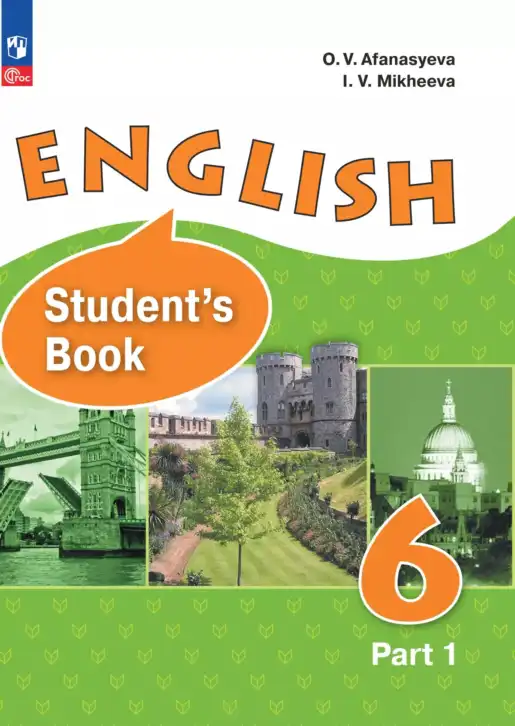
Учебник Английский язык Углубленный уровень для 6 класса от автора О.В. Афанасьевой и И.В. Михеевой – это популярное пособие, входящее в линейку УМК «Rainbow English». Он предназначен для детей, только начинающих изучать английский, и помогает сделать первые шаги в языке увлекательными и эффективными.
ГДЗ по Английскому языку 6 Класс Часть 2 Страница 75 Углубленный Уровень Афанасьева, Михеева — Подробные Ответы
Work in pairs. Interview your partner. Find out:
1) if he/she lives in an agricultural area, where exactly;
2) if he/she has ever argued with his/her parents (teachers), when exactly;
3) if he/she has been injured, when exactly;
4) if he/she has any relatives (friends) at university, when they entered their universities;
5) if he/she can remember a book in which a character rescued a person or an animal and what book it was;
6) if he/she has ever helped injured people or injured animals and where and how it was;
7) when and why he/she writes brief letters, has brief talks or brief holidays;
8) what languages he/she would like to speak fluently.
Работайте в парах. Возьмите интервью у своего партнера. Выясните:
Ответ:
1) No, I don’t. I live in a city. (Нет. Я живу в городе.)
2) Yes, I sometimes argue with my parents about my homework. It happened last night. (Да, я иногда спорю с родителями из-за домашнего задания. Это случилось вчера вечером.)
3) Yes, I broke my leg a few years ago when I was skateboarding. (Да, я сломал ногу несколько лет назад, когда катался на скейтборде.)
4) Yes, my older sister is a university student. She entered university last year. (Да, моя старшая сестра — студентка. Она поступила в университет в прошлом году.)
5) I can remember the book Harry Potter and the Chamber of Secrets. Harry saved Ginny Weasley from the basilisk. (Я могу вспомнить книгу «Гарри Поттер и Тайная комната». Гарри спас Джинни Уизли от василиска.)
6) I once found a stray kitten with an injured paw in the park. I took it to a vet with my mom. (Однажды я нашел в парке бездомного котенка с раненой лапкой. Мы с мамой отвезли его к ветеринару.)
7) I write brief messages to my friends to make plans. I usually have brief holidays during the school year because we don’t get much time off. (Я пишу короткие сообщения друзьям, чтобы договориться о планах. Обычно у меня короткие каникулы в течение учебного года, потому что у нас не так много выходных.)
8) I would like to be fluent in English and maybe Korean, because I like K-pop. (Я бы хотел свободно говорить на английском и, может быть, на корейском, потому что мне нравится K-pop.)
English Explanation:
1. «No, I don’t. I live in a city.»
- This answer indicates that the person does not live in the countryside or a rural area but rather in a city. It’s a simple «no» response to a likely question about living in the countryside.
2. «Yes, I sometimes argue with my parents about my homework. It happened last night.»
- This answer indicates that the person does sometimes have disagreements with their parents regarding homework. The speaker gives a specific example of a time it happened, mentioning that it occurred the previous night.
3. «Yes, I broke my leg a few years ago when I was skateboarding.»
- The speaker confirms that they once broke their leg. They specify when it happened (a few years ago) and explain that it occurred while skateboarding, providing context for the injury.
4. «Yes, my older sister is a university student. She entered university last year.»
- The person answers affirmatively and gives additional details about their older sister. They mention that she is a university student and that she started her studies last year.
5. «I can remember the book Harry Potter and the Chamber of Secrets. Harry saved Ginny Weasley from the basilisk.»
- This response shares a memory of the book «Harry Potter and the Chamber of Secrets.» The speaker recalls a specific event in the book where Harry Potter saves Ginny Weasley from the basilisk.
6. «I once found a stray kitten with an injured paw in the park. I took it to a vet with my mom.»
- Here, the speaker shares a memory of helping an injured kitten they found in the park. They took action by bringing the kitten to a vet, doing so with their mother, showing empathy and responsibility.
7. «I write brief messages to my friends to make plans. I usually have brief holidays during the school year because we don’t get much time off.»
- The speaker explains how they communicate with their friends (using brief messages) to make plans. They also mention their school holidays, explaining that they are usually short due to limited time off.
8. «I would like to be fluent in English and maybe Korean, because I like K-pop.»
- This is a personal goal, where the speaker expresses a desire to be fluent in English and possibly Korean. The motivation behind learning Korean is their interest in K-pop, a popular genre of music.
Перевод:
1. «Нет. Я живу в городе.»
- Этот ответ указывает, что человек не живет в сельской местности, а в городе. Это простой ответ на вопрос, вероятно, о том, живет ли он/она в деревне.
2. «Да, я иногда спорю с родителями из-за домашнего задания. Это случилось вчера вечером.»
- Здесь человек признает, что иногда бывают разногласия с родителями по поводу домашнего задания. Он/она дает конкретный пример и сообщает, что это произошло вчера вечером.
3. «Да, я сломал ногу несколько лет назад, когда катался на скейтборде.»
- Человек подтверждает, что когда-то сломал ногу. Он/она уточняет, когда это произошло (несколько лет назад) и объясняет, что это случилось во время катания на скейтборде.
4. «Да, моя старшая сестра — студентка. Она поступила в университет в прошлом году.»
- Этот ответ утвердительный, и дается дополнительная информация о старшей сестре. Человек рассказывает, что она студентка и поступила в университет в прошлом году.
5. «Я могу вспомнить книгу «Гарри Поттер и Тайная комната». Гарри спас Джинни Уизли от василиска.»
- Здесь человек делится воспоминаниями о книге «Гарри Поттер и Тайная комната». Он/она помнит конкретное событие, когда Гарри спас Джинни Уизли от василиска.
6. «Однажды я нашел в парке бездомного котенка с раненой лапкой. Мы с мамой отвезли его к ветеринару.»
- Здесь человек рассказывает, как он/она нашел раненого котенка и принял меры, отвезя его к ветеринару вместе с мамой, что демонстрирует заботу и ответственность.
7. «Я пишу короткие сообщения друзьям, чтобы договориться о планах. Обычно у меня короткие каникулы в течение учебного года, потому что у нас не так много выходных.»
- Человек объясняет, как общается с друзьями — через короткие сообщения для планирования встреч. Также упоминается, что каникулы в учебный период короткие из-за ограниченного количества выходных.
8. «Я бы хотел свободно говорить на английском и, может быть, на корейском, потому что мне нравится K-pop.»
- Это личная цель, где человек выражает желание овладеть английским и, возможно, корейским языком. Мотивация к изучению корейского языка связана с его/её интересом к K-pop — популярному музыкальному жанру.
Summary in English and Russian:
Both versions cover similar information, discussing answers to various questions about the person’s experiences, family, hobbies, and aspirations. Each answer provides clear insights into their life and interests, whether it’s about disagreements with parents, learning a new language, or recalling memorable moments with animals or books. The tone is casual and reflects a conversational style suitable for an informal interview or letter.
Complete the situations saying what you’d like other people to do instead of you. Use the example.
Example: I don’t want to speak to Mr Winston. I want … .
I don’t want to speak to Mr Winston. I want my Granny to speak to him. I want her to speak to Mr Winston on Monday.
1. I wouldn’t like to enter this college. I would like ….
2. I don’t expect you to finish the job. I expect ….
3. I don’t want to write a letter to John. I want ….
4. I don’t want to look after Nelly’s cat. I expect ….
5. I wouldn’t like to invite Stephen to our party. I would like ….
6. I don’t want to pay for the ticket. I want ….
Дополните ситуации, сказав, что бы вы хотели, чтобы другие люди сделали вместо вас. Используйте пример.
Ответ:
1. I would like my friend to enter this college. (Я бы хотел, чтобы мой друг поступил в этот колледж.)
2. I expect them to finish the job. (Я ожидаю, что они закончат работу.)
3. I want her to write a letter to John. (Я хочу, чтобы она написала письмо Джону.)
4. I expect Nelly to look after her cat. (Я ожидаю, что Нелли будет присматривать за своей кошкой.)
5. I would like you to invite Stephen to our party. (Я бы хотел, чтобы ты пригласил Стивена на нашу вечеринку.)
6. I want my parents to pay for the ticket. (Я хочу, чтобы мои родители заплатили за билет.)
English Explanation:
1. «I would like my friend to enter this college.»
- This sentence expresses a wish or desire for someone else to take an action. Alex wishes for their friend to apply and be accepted into the college. The phrase «I would like» is used to indicate a polite desire or preference.
2. «I expect them to finish the job.»
- Here, the speaker expresses an expectation that someone (likely colleagues or friends) will complete a task. «Expect» suggests that the speaker believes it is important or likely that the others will finish the job.
3. «I want her to write a letter to John.»
- This expresses a specific desire for someone (likely a friend or acquaintance) to write a letter to another person named John. «Want» shows a more direct and strong desire than «would like.»
4. «I expect Nelly to look after her cat.»
- This sentence indicates that the speaker believes or hopes that Nelly will take care of her cat. «Expect» suggests a reasonable assumption or demand for Nelly to fulfill this responsibility.
5. «I would like you to invite Stephen to our party.»
- Here, the speaker politely asks someone (likely a friend) to invite Stephen to a party. «I would like» makes the request polite and soft, indicating a preference rather than a demand.
6. «I want my parents to pay for the ticket.»
- This expresses a direct and strong desire for the speaker’s parents to pay for the ticket. «Want» shows that the speaker is asking for something specific.
Перевод:
1. «Я бы хотел, чтобы мой друг поступил в этот колледж.»
- Это предложение выражает желание или просьбу, чтобы кто-то другой, в данном случае друг, поступил в колледж. Фраза «Я бы хотел» используется для того, чтобы вежливо выразить желание.
2. «Я ожидаю, что они закончат работу.»
- Здесь говорящий выражает ожидание того, что другие (например, коллеги или друзья) завершат какую-то работу. «Ожидаю» говорит о том, что говорящий считает завершение работы важным или вероятным.
3. «Я хочу, чтобы она написала письмо Джону.»
- Это более прямое выражение желания, чтобы кто-то (возможно, знакомая или подруга) написала письмо Джону. Слово «хочу» указывает на более сильное желание, чем «я бы хотел.»
4. «Я ожидаю, что Нелли будет присматривать за своей кошкой.»
- Здесь говорящий выражает ожидание, что Нелли будет заботиться о своей кошке. «Ожидаю» говорит о том, что это разумная или необходимая ответственность для Нелли.
5. «Я бы хотел, чтобы ты пригласил Стивена на нашу вечеринку.»
- В этом предложении говорящий вежливо просит пригласить Стивена на вечеринку. Использование «Я бы хотел» делает просьбу мягкой и вежливой.
6. «Я хочу, чтобы мои родители заплатили за билет.»
- Здесь выражается прямое желание, чтобы родители заплатили за билет. «Хочу» указывает на явную просьбу, без мягкости, как в предыдущем примере.
Summary:
- «I would like» is used for polite requests or wishes, often softening the tone.
- «I expect» shows an assumption or belief that something will happen, often used in situations where the speaker believes something is likely or should happen.
- «I want» is a stronger expression of desire, indicating that the speaker has a clear and direct wish.
Read the headlines and match the beginnings of the stories with them.
A. A Brief Answer
B. The Mountain Rescue Service at Work
C. A Surprise
D. Heart Health
1
Mary’s granny was nearly 70 and Mary’s parents wanted to give the old lady a nice birthday present. But their idea of «a nice present» was different from Mary’s. One day they even had a long argument about…
2
Allan Hobbs was a very lazy student at school. Nobody could make him work or be helpful. He fought with other pupils, was rude to the teachers. One day a letter came to Allan’s parents with his school record¹…
3
John’s brother was fast asleep when the telephone rang. He woke up immediately and in less than five minutes he was ready to start. «There will be a lot of injured people in this awful snowfall,» he thought looking out of the window…
4
When Dave Morgan was young, he played a lot of games and he was thin and strong. But when he was forty-five, he began to get fat and slow down. His speech was not as fluent as before, and when he walked rather fast, he felt a sudden pain in his heart. He did not do anything about this for a long time, but finally…
Прочитайте заголовки и сопоставьте их с началами рассказов.
Ответ:
| 1 — C | A Surprise / Сюрприз |
| 2 — A | A Brief Answer / Краткий ответ |
| 3 — B | The Mountain Rescue Service at Work / Горноспасательная служба за работой |
| 4 — D | Heart Health / Здоровье сердца |
English Explanation:
1. A. A Brief Answer
- The headline suggests a short, clear reply to something. This matches the story about Mary’s granny, where her family has a disagreement over what kind of birthday present would be best for her. The story likely revolves around the different perspectives or opinions about what is considered a «nice present.»
2. C. A Surprise
- The headline «A Surprise» indicates an unexpected or surprising event. This matches the story of Allan Hobbs, a lazy and unmotivated student who receives a surprising school report. This story likely deals with an unexpected result or turn of events regarding Allan’s school performance.
3. B. The Mountain Rescue Service at Work
- The headline suggests a story about the mountain rescue team, likely in an emergency situation. This fits the story about John’s brother, who is ready to help immediately during a snowfall, likely for a mountain rescue operation. This story involves a quick response to an emergency situation in the mountains.
4. D. Heart Health
- The headline indicates a focus on issues related to heart health. This matches the story of Dave Morgan, who experiences pain in his heart and feels the effects of aging and health problems. His story focuses on health and the need to address heart-related issues, which fits the theme of heart health.
Перевод:
1. A. Краткий ответ
- Заголовок подразумевает короткий и ясный ответ на что-то. Это соответствует рассказу о бабушке Мэри, где её семья не может прийти к согласию по поводу того, что подарить ей на день рождения. История, вероятно, касается разных мнений о том, что является «хорошим подарком».
2. C. Сюрприз
- Заголовок «Сюрприз» подразумевает неожиданный или удивительный случай. Это подходит для истории о Аллане Хоббе, ленивом и незаинтересованном ученике, который получает неожиданную школьную оценку. Эта история, скорее всего, расскажет о неожиданном результате или повороте событий, связанных с успеваемостью Аллана.
3. B. Спасательная служба в горах
- Заголовок подразумевает рассказ о спасательной службе в горах, вероятно, в экстренной ситуации. Это соответствует истории о брате Джона, который готов помочь в случае снегопада, вероятно, для спасательной операции в горах. История включает в себя быструю реакцию на экстренную ситуацию в горах.
4. D. Здоровье сердца
- Заголовок указывает на проблему со здоровьем сердца. Это соответствует рассказу о Дейве Моргане, который чувствует боль в сердце и сталкивается с последствиями старения и проблем со здоровьем. Его история сосредоточена на здоровье и необходимости решать вопросы, связанные с сердечными заболеваниями, что подходит для темы здоровья сердца.
Summary in English:
The four headlines and the story beginnings are matched as follows:
- «A Brief Answer» fits with the story about Mary’s granny and her family’s disagreement over a gift.
- «A Surprise» matches the story of Allan Hobbs, a lazy student, and his surprising school report.
- «The Mountain Rescue Service at Work» fits with the story about John’s brother getting ready for a rescue mission in a snowfall.
- «Heart Health» matches the story about Dave Morgan, who faces health problems related to his heart and aging.
These matches show how each headline corresponds to the main theme or event in the story.
Summary in Russian:
Четыре заголовка и начала историй соответствуют следующим образом:
- «Краткий ответ» соответствует истории о бабушке Мэри и её семейном споре о подарке.
- «Сюрприз» подходит для истории о Аллане Хоббе, ленивом ученике, и его неожиданной школьной оценке.
- «Спасательная служба в горах» соответствует рассказу о брате Джона, который готовится к спасательной миссии во время снегопада.
- «Здоровье сердца» соответствует истории о Дейве Моргане, который сталкивается с проблемами со здоровьем сердца и старением.

Оставь свой отзыв 💬
Комментариев пока нет, будьте первым!