

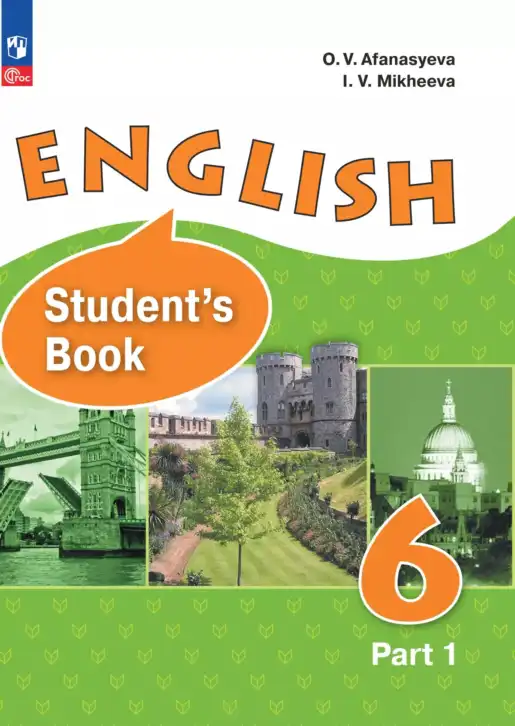
Учебник Английский язык Углубленный уровень для 6 класса от автора О.В. Афанасьевой и И.В. Михеевой – это популярное пособие, входящее в линейку УМК «Rainbow English». Он предназначен для детей, только начинающих изучать английский, и помогает сделать первые шаги в языке увлекательными и эффективными.
ГДЗ по Английскому языку 6 Класс Часть 2 Страница 55 Углубленный Уровень Афанасьева, Михеева — Подробные Ответы
Use for, up (in), at, after, through after the verb to look in each sentence.
1. People like to look … animals at the zoo.
2. She took a pencil out of the pocket and looked around … some paper.
3. Will you look … my garden while I’m away?
4. They will look … the projects and choose the best.
5. If you don’t know the word, you should look it … in the dictionary.
6. Where have you been? I’ve been looking … you all over.
7. Where is little Ann? Who is looking … the baby?
FOCUS
Complex Object
| Subject | see | the boys | do/doing sth |
| watch | the girl | ||
| notice | me | ||
| hear | us | ||
| feel | him | ||
| her | |||
| it | |||
| you | |||
| them |
I saw Mother cook/cooking a pie.
We did not notice them come/coming in.
Did you hear Nick sing/singing at the party?
Mr Brown felt the little girl touch his hand.
1. We did not notice them come back.
1. Мы не заметили, как они вернулись.
2. Mother watched the children playing.
2. Мама наблюдала, как дети играли.
3. Who saw Mr Smith swim across the river?
3. Кто видел, что мистер Смит переплыл реку?
4. I didn’t hear you come in.
4. Я не слышал, как ты вошёл.
5. She suddenly felt someone touch her on the shoulder.
5. Внезапно она почувствовала, как кто-то дотронулся до её плеча.
6. Can you hear a child crying?
6. Ты слышишь, как плачет ребёнок?
See Reference Grammar, part 2, p. 172
Используйте for, up (in), at, after, through после глагола ‘to look’ в каждом предложении.
Ответ:
1. People like to look at animals at the zoo. Людям нравится смотреть на животных в зоопарке.
2. She took a pencil out of the pocket and looked around for some paper. Она достала карандаш из кармана и стала искать бумагу.
3. Will you look after my garden while I’m away? Вы присмотрите за моим садом, пока меня не будет?
4. They will look through the projects and choose the best. Они просмотрят проекты и выберут лучший.
5. If you don’t know the word, you should look it up in the dictionary. Если вы не знаете слово, вам следует посмотреть его в словаре.
6. Where have you been? I’ve been looking for you all over. Где ты был? Я искал тебя повсюду.
7. Where is little Ann? Who is looking after the baby? Где маленькая Энн? Кто присматривает за ребенком?
- People like to look at animals at the zoo.
Людям нравится смотреть на животных в зоопарке.
In this sentence, «look at» means to direct one’s eyes toward something in order to observe it. Here, people are observing animals while visiting the zoo.
В этом предложении «look at» означает направить взгляд на что-то, чтобы это наблюдать. Здесь люди наблюдают за животными, находясь в зоопарке. - She took a pencil out of the pocket and looked around for some paper.
Она достала карандаш из кармана и стала искать бумагу.
In this case, «looked around for» means to search for something by scanning the area. She is looking around to find some paper after taking out the pencil.
Здесь «looked around for» означает искать что-то, осматривая пространство вокруг. Она осматривается в поисках бумаги после того, как достала карандаш. - Will you look after my garden while I’m away?
Вы присмотрите за моим садом, пока меня не будет?
«Look after» means to take care of something or someone. In this case, the person is asking for someone to take care of their garden in their absence.
«Look after» означает заботиться о чем-то или ком-то. В данном случае человек просит присмотреть за садом в его отсутствие. - They will look through the projects and choose the best.
Они просмотрят проекты и выберут лучший.
«Look through» means to examine something carefully, usually quickly or in detail. In this context, they are going to review the projects before making a selection.
«Look through» означает тщательно осматривать что-то, обычно быстро или детально. В этом контексте они собираются просмотреть проекты, прежде чем выбрать лучший. - If you don’t know the word, you should look it up in the dictionary.
Если вы не знаете слово, вам следует посмотреть его в словаре.
«Look up» means to search for information, usually in a reference book, such as a dictionary. Here, it refers to finding the meaning of a word.
«Look up» означает искать информацию, обычно в справочном источнике, таком как словарь. Здесь это относится к поиску значения слова. - Where have you been? I’ve been looking for you all over.
Где ты был? Я искал тебя повсюду.
«Looking for» means trying to find someone or something. The speaker has been searching everywhere to find the person.
«Looking for» означает пытаться найти кого-то или что-то. Говорящий искал человека везде, чтобы его найти. - Where is little Ann? Who is looking after the baby?
Где маленькая Энн? Кто присматривает за ребенком?
«Looking after» again means taking care of someone. In this sentence, it refers to someone being responsible for taking care of the baby while Ann is not around.
«Looking after» снова означает заботиться о ком-то. В этом предложении это означает, что кто-то несет ответственность за заботу о ребенке, пока Энн нет рядом.

Оставь свой отзыв 💬
Комментариев пока нет, будьте первым!