

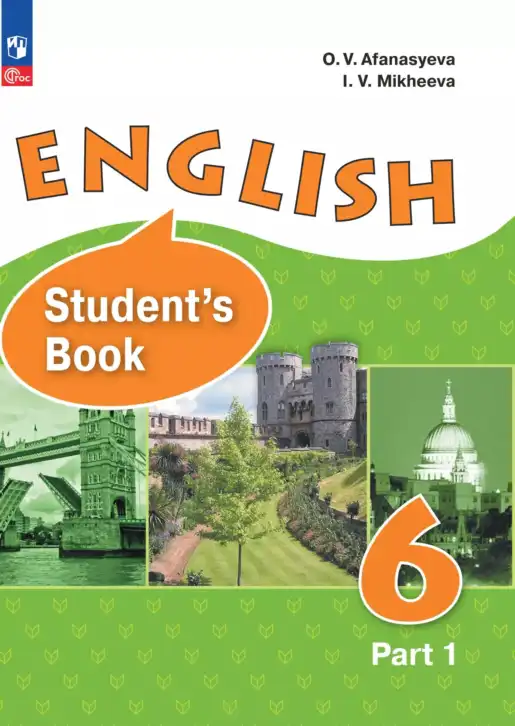
Учебник Английский язык Углубленный уровень для 6 класса от автора О.В. Афанасьевой и И.В. Михеевой – это популярное пособие, входящее в линейку УМК «Rainbow English». Он предназначен для детей, только начинающих изучать английский, и помогает сделать первые шаги в языке увлекательными и эффективными.
ГДЗ по Английскому языку 6 Класс Часть 2 Страница 144 Углубленный Уровень Афанасьева, Михеева — Подробные Ответы
Mr Wilson is flying to Sydney, Australia. It’s a very long way. Say what Mr Wilson will be doing during his flight.
Example: the passengers occupy their seats/to read — When the passengers occupy their seats, Mr Wilson will be reading.
1. the plane takes off/to play a computer game
2. lunch is brought/to talk to the passenger next to him
3. the «no smoking» notice appears / to sleep
4. the video is turned on/to watch a film
5. the plane starts landing/to look through the window
Мистер Уилсон летит в Сидней, Австралия. Это очень долгий путь. Скажите, что мистер Уилсон будет делать во время своего полета.
Ответ:
1. When the plane takes off, Mr Wilson will be playing a computer game. (Когда самолет взлетит, мистер Уилсон будет играть в компьютерную игру.)
2. When lunch is brought, Mr Wilson will be talking to the passenger next to him. (Когда принесут обед, мистер Уилсон будет разговаривать с пассажиром рядом с ним.)
3. When the “no smoking” notice appears, Mr Wilson will be sleeping. (Когда появится знак «не курить», мистер Уилсон будет спать.)
4. When the video is turned on, Mr Wilson will be watching a film. (Когда включат видео, мистер Уилсон будет смотреть фильм.)
5. When the plane starts landing, Mr Wilson will be looking through the window. (Когда самолет начнет приземляться, мистер Уилсон будет смотреть в окно.)
1. When the plane takes off, Mr. Wilson will be playing a computer game.
Когда самолет взлетит, мистер Уилсон будет играть в компьютерную игру.
At the moment the plane takes off, Mr. Wilson will be engaging in a game on his device. Playing a computer game is a way to pass time during a long flight. It’s likely that he enjoys this activity as it helps him stay entertained and distracted during the early stages of the journey.
(В момент взлета самолета мистер Уилсон будет увлечен игрой на своем устройстве. Игры на компьютере — это способ убить время во время долгого полета. Возможно, он наслаждается этим занятием, так как оно помогает ему оставаться развлекаемым и не обращать внимания на длительность путешествия в начале рейса.)
2. When lunch is brought, Mr. Wilson will be talking to the passenger next to him.
Когда принесут обед, мистер Уилсон будет разговаривать с пассажиром рядом с ним.
During the meal service, Mr. Wilson will engage in a conversation with the passenger sitting beside him. This is a typical way to pass time on a long flight. Many people enjoy chatting with fellow passengers, especially during a meal, as it creates a more relaxed and social atmosphere.
(Во время подачи обеда мистер Уилсон будет беседовать с пассажиром, сидящим рядом с ним. Это типичный способ скоротать время во время долгого полета. Многие люди любят общаться с соседями по рейсу, особенно во время еды, так как это создает более расслабленную и дружелюбную атмосферу.)
3. When the “no smoking” notice appears, Mr. Wilson will be sleeping.
Когда появится знак «не курить», мистер Уилсон будет спать.
When the «no smoking» sign is turned on, Mr. Wilson will be sleeping. This often happens after the meal service or when passengers are asked to settle down for the remainder of the flight. Sleeping is a common activity on long flights, as passengers try to rest and pass the time during the journey.
(Когда загорится знак «не курить», мистер Уилсон будет спать. Это часто происходит после подачи обеда или когда пассажиров просят устроиться поудобнее на оставшуюся часть полета. Сон — это обычное занятие на долгих рейсах, так как пассажиры стараются отдохнуть и скоротать время во время путешествия.)
4. When the video is turned on, Mr. Wilson will be watching a film.
Когда включат видео, мистер Уилсон будет смотреть фильм.
When the in-flight entertainment system is turned on, Mr. Wilson will watch a film. This is a common option on long flights, where passengers are given the opportunity to watch movies or TV shows. It’s a great way to stay entertained and make the flight feel shorter.
(Когда включат систему развлечений на борту, мистер Уилсон будет смотреть фильм. Это обычная опция на долгих рейсах, когда пассажирам предоставляется возможность смотреть фильмы или телешоу. Это отличный способ развлечься и сделать полет более коротким.)
5. When the plane starts landing, Mr. Wilson will be looking through the window.
Когда самолет начнет приземляться, мистер Уилсон будет смотреть в окно.
As the plane begins its descent, Mr. Wilson will likely look out of the window. Many passengers enjoy watching the view as the plane prepares to land, as it gives them a chance to see the landscape and get a glimpse of the city or area they are arriving in.
(Когда самолет начнет снижаться, мистер Уилсон, вероятно, будет смотреть в окно. Многие пассажиры любят смотреть в окно, когда самолет готовится к посадке, так как это дает им возможность увидеть пейзаж и взглянуть на город или местность, в которую они прилетают.)
Use the verbs in brackets (in Present Indefinite, Present Continuous, Future Indefinite or Future Continuous) to complete the sentences. (In some cases more than one tense is possible.)
1. I’ll phone you when I (to arrive) in Moscow.
2. Come at seven: we (to have) dinner and you (to be able) to join us.
3. What you (to do) when you (to arrive) at the hotel?
4. If mother (to come) home early, we (to go) to the cinema together.
5. You (to see) us when we (to climb) that hill over there.
6. Who (to play) football tomorrow?
7. You (to look) at me when I (to dance) on the stage?
8. When you (to tell) me what I should do with these books?
Используйте глаголы в скобках (в Present Indefinite, Present Continuous, Future Indefinite или Future Continuous), чтобы дополнить предложения. (В некоторых случаях возможен не один вариант времени.)
Ответ:
1. I’ll phone you when I arrive in Moscow.
Я позвоню тебе, когда приеду в Москву.
2. Come at seven: we will be having dinner and you will be able to join us.
Приходи в семь: мы будем ужинать, и ты сможешь к нам присоединиться.
3. What will you do when you arrive at the hotel?
Что ты будешь делать, когда приедешь в отель?
4. If mother comes home early, we will go to the cinema together.
Если мама придёт домой рано, мы пойдём в кино вместе.
5. You will see us when we are climbing that hill over there.
Ты увидишь нас, когда мы будем взбираться на тот холм вон там.
6. Who will play football tomorrow?
Кто будет играть в футбол завтра?
7. Will you be looking at me when I am dancing on the stage?
Ты будешь смотреть на меня, когда я буду танцевать на сцене?
8. When will you tell me what I should do with these books?
Когда ты скажешь мне, что мне делать с этими книгами?
1. I’ll phone you when I arrive in Moscow.
Я позвоню тебе, когда приеду в Москву.
This sentence uses the Future Indefinite tense («will phone») and the Present Indefinite tense («arrive»). The Future Indefinite is used because it describes an action that will happen in the future. The Present Indefinite is used in «when I arrive» because the event (arrival) is considered certain and fixed in the future, which is why we use the present tense in this time clause.
(Это предложение использует время Future Indefinite («will phone») и Present Indefinite («arrive»). Future Indefinite используется, потому что действие произойдет в будущем. Present Indefinite используется в «when I arrive», потому что событие (прибытие) считается определенным и фиксированным в будущем, поэтому в этом придаточном предложении используется настоящее время.)
2. Come at seven: we will be having dinner and you will be able to join us.
Приходи в семь: мы будем ужинать, и ты сможешь к нам присоединиться.
In this sentence, Future Continuous («will be having») is used because it describes an action that will be in progress at a specific time in the future (at seven). The Future Indefinite («will be able») is used because it indicates a future action that is a possibility or ability.
(В этом предложении используется Future Continuous («will be having»), потому что оно описывает действие, которое будет происходить в конкретный момент в будущем (в семь). Future Indefinite («will be able») используется, потому что оно указывает на возможное или способное действие в будущем.)
3. What will you do when you arrive at the hotel?
Что ты будешь делать, когда приедешь в отель?
Here, Future Indefinite («will do») is used because the question refers to a future action. The Present Indefinite («arrive») is used in the time clause because the arrival is a fixed event, and we typically use the present tense in time clauses after «when» to refer to the future.
(Здесь используется Future Indefinite («will do»), потому что вопрос относится к действию в будущем. Present Indefinite («arrive») используется в придаточном предложении времени, потому что прибытие — это фиксированное событие, и обычно мы используем настоящее время в придаточных предложениях времени после «when», чтобы говорить о будущем.)
4. If mother comes home early, we will go to the cinema together.
Если мама придёт домой рано, мы пойдём в кино вместе.
In this conditional sentence, the Present Indefinite («comes») is used in the «if» clause because it is a real condition. The Future Indefinite («will go») is used in the main clause to indicate the future result of the condition.
(В этом условном предложении используется Present Indefinite («comes») в части с «if», потому что это реальное условие. Future Indefinite («will go») используется в главном предложении для указания на будущее следствие этого условия.)
5. You will see us when we are climbing that hill over there.
Ты увидишь нас, когда мы будем взбираться на тот холм вон там.
Here, Future Indefinite («will see») is used because it refers to a future action, and Future Continuous («are climbing») is used for the action that will be ongoing in the future at the same time as the seeing happens.
(Здесь используется Future Indefinite («will see»), потому что оно относится к действию в будущем, а Future Continuous («are climbing») используется для действия, которое будет происходить в будущем одновременно с действием «увидеть».)
6. Who will play football tomorrow?
Кто будет играть в футбол завтра?
This sentence uses Future Indefinite («will play») because it’s asking about an event in the future. The verb «will play» is in the future tense to express an action that will occur tomorrow.
(Это предложение использует Future Indefinite («will play»), потому что оно спрашивает о событии в будущем. Глагол «will play» находится в будущем времени, чтобы выразить действие, которое произойдёт завтра.)
7. Will you be looking at me when I am dancing on the stage?
Ты будешь смотреть на меня, когда я буду танцевать на сцене?
This question uses Future Continuous («will be looking» and «am dancing») because it asks about two actions that will be happening at the same time in the future. Future Continuous emphasizes that the actions will be ongoing in the future.
(Этот вопрос использует Future Continuous («will be looking» и «am dancing»), потому что он спрашивает о двух действиях, которые будут происходить одновременно в будущем. Future Continuous подчеркивает, что эти действия будут продолжаться в будущем.)
8. When will you tell me what I should do with these books?
Когда ты скажешь мне, что мне делать с этими книгами?
Future Indefinite («will tell») is used to ask about a future action that will happen at a specific time. The question refers to a time in the future when the person will give information.
(Future Indefinite («will tell») используется, чтобы спросить о действии в будущем, которое произойдёт в определённый момент. Вопрос касается времени в будущем, когда человек скажет информацию.)


Оставь свой отзыв 💬
Комментариев пока нет, будьте первым!