

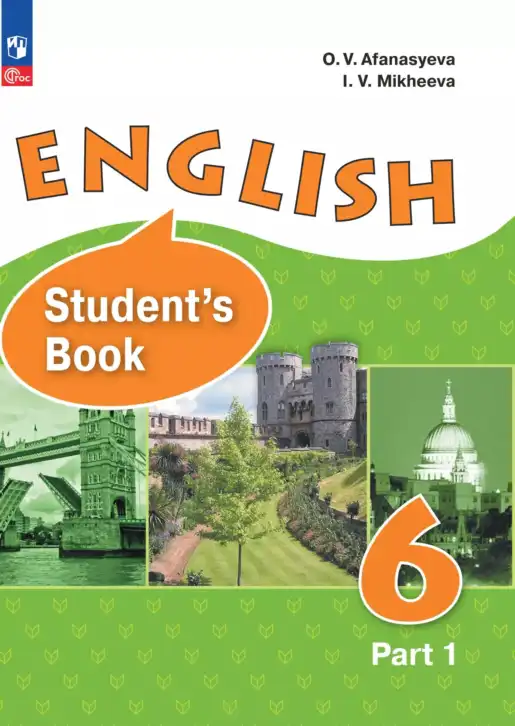
Учебник Английский язык Углубленный уровень для 6 класса от автора О.В. Афанасьевой и И.В. Михеевой – это популярное пособие, входящее в линейку УМК «Rainbow English». Он предназначен для детей, только начинающих изучать английский, и помогает сделать первые шаги в языке увлекательными и эффективными.
ГДЗ по Английскому языку 6 Класс Часть 2 Страница 125 Углубленный Уровень Афанасьева, Михеева — Подробные Ответы
Complete the sentences with the appropriate words from the box.
at, after, away, back, down, for, through, off
1. While Mr Johnson was away, his stepdaughter looked … the farm.
2. The plane took …., and we saw the view of the mighty ocean and the yellow sandy beach below us.
3. Please look … this book and say what event in Russian history it describes.
4. — What are you looking …? — The book that I borrowed from the library. I want to take it ….
5. The teacher asked us to take … a number of new words.
6. The trunk of the tree was so huge that four people could not take it ….
7. He looked … the picture of a desert for a long time. Something in that picture attracted him.
8. The boy took … his father: he was smart and very gentlemanlike.
Заполните предложения подходящими словами из рамки.
Ответ:
1. While Mr Johnson was away, his stepdaughter looked after the farm. / Пока мистер Джонсон был в отъезде, его падчерица присматривала за фермой.
2. The plane took off, and we saw the view of the mighty ocean and the yellow sandy beach below us. / Самолет взлетел, и мы увидели вид на могучий океан и желтый песчаный пляж под нами.
3. Please look through this book and say what event in Russian history it describes. / Пожалуйста, просмотри эту книгу и скажи, какое событие в истории России она описывает.
4. — What are you looking for? — The book that I borrowed from the library. I want to take it back. / — Что ты ищешь? — Книгу, которую я взял в библиотеке. Я хочу вернуть её обратно.
5. The teacher asked us to take down a number of new words. / Учитель попросил нас записать несколько новых слов.
6. The trunk of the tree was so huge that four people could not take it away. / Ствол дерева был таким огромным, что четыре человека не могли его унести.
7. He looked at the picture of a desert for a long time. Something in that picture attracted him. / Он долго смотрел на картину с изображением пустыни. Что-то в этой картине привлекло его.
8. The boy took after his father: he was smart and very gentlemanlike. / Мальчик пошел в своего отца: он был умным и очень воспитанным.
1. While Mr Johnson was away, his stepdaughter looked after the farm. / Пока мистер Джонсон был в отъезде, его падчерица присматривала за фермой.
- The phrase «looked after» means to take care of or supervise something or someone. In this context, Mr. Johnson’s stepdaughter was responsible for taking care of the farm while he was away.
- Фраза «присматривала за» означает заботиться или следить за чем-то или кем-то. В этом контексте падчерица мистера Джонсона была ответственна за уход за фермой, пока он был в отъезде.
2. The plane took off, and we saw the view of the mighty ocean and the yellow sandy beach below us. / Самолет взлетел, и мы увидели вид на могучий океан и желтый песчаный пляж под нами.
- The phrase «took off» refers to when an airplane rises from the ground and begins its flight. It marks the start of the flight.
- The word «mighty» is used here to describe something powerful or impressive. In this case, it emphasizes the vastness and power of the ocean.
- Фраза «взлетел» означает, что самолет оторвался от земли и начал полет. Это момент начала полета.
- Слово «могучий» используется здесь для описания чего-то мощного или впечатляющего. В данном контексте оно подчеркивает величие и мощь океана.
3. Please look through this book and say what event in Russian history it describes. / Пожалуйста, просмотри эту книгу и скажи, какое событие в истории России она описывает.
- The phrase «look through» means to quickly examine or browse something. It suggests not reading in detail, but rather skimming through the content to get an overview.
- Фраза «просмотри» означает быстрое ознакомление или пролистывание чего-то. Это предполагает не тщательное чтение, а поверхностное ознакомление с содержимым.
4. — What are you looking for? — The book that I borrowed from the library. I want to take it back. / — Что ты ищешь? — Книгу, которую я взял в библиотеке. Я хочу вернуть её обратно.
- The phrase «looking for» means to search for something. In this case, the person is actively searching for the book they borrowed.
- «Take it back» means to return something to its original place, in this case, returning the book to the library.
- Фраза «ищешь» означает поиск чего-то. В этом случае человек активно ищет книгу, которую он взял.
- «Вернуть» означает отдать что-то обратно в исходное место, в данном случае книгу в библиотеку.
5. The teacher asked us to take down a number of new words. / Учитель попросил нас записать несколько новых слов.
- The phrase «take down» means to write something down or record it. The teacher asked the students to write down new words for learning.
- Фраза «записать» означает записать что-то или сделать запись. Учитель попросил учеников записать новые слова для дальнейшего изучения.
6. The trunk of the tree was so huge that four people could not take it away. / Ствол дерева был таким огромным, что четыре человека не могли его унести.
- «Take it away» means to remove something from its current location. In this case, it refers to moving the huge trunk of the tree, which was so large that four people could not carry it.
- Фраза «унести» означает перенести что-то с одного места в другое. В этом случае это относится к попытке переместить огромный ствол дерева, который был настолько большим, что четыре человека не могли его унести.
7. He looked at the picture of a desert for a long time. Something in that picture attracted him. / Он долго смотрел на картину с изображением пустыни. Что-то в этой картине привлекло его.
- «Looked at» means to direct one’s gaze or attention toward something. Here, the person is focusing on a picture of a desert.
- «Attracted» means that something drew the person’s attention, making it seem interesting or appealing.
- Фраза «смотрел на» означает направить взгляд или внимание на что-то. Здесь человек сосредоточился на картине с изображением пустыни.
- «Привлекло» означает, что что-то заинтересовало человека, сделав это интересным или привлекательным.
8. The boy took after his father: he was smart and very gentlemanlike. / Мальчик пошел в своего отца: он был умным и очень воспитанным.
- The phrase «took after» means to resemble or inherit qualities from someone, usually a family member. In this case, the boy is similar to his father in intelligence and manners.
- Фраза «пошел в» означает, что мальчик унаследовал или стал похож на своего отца в плане характера или внешности. В данном контексте мальчик похож на своего отца в плане умственных способностей и манер.
Summary / Резюме:
Each sentence in the provided examples uses specific phrases that describe actions and qualities. «Looked after» refers to taking care of something, «took off» describes the act of a plane leaving the ground, «doggy bags» refer to taking leftovers home, and «take down» indicates writing something down. These phrases enrich the language by providing specific ways to express different ideas.
Каждое предложение в предложенных примерах использует специфические фразы, которые описывают действия и качества. «Присматривала за» относится к заботе о чем-то, «взлетел» описывает акт взлета самолета, «doggy bags» означают упаковки для остатков еды, а «записать» указывает на действие записи. Эти фразы обогащают язык, предоставляя конкретные способы выражения разных идей.
Complete the sentences with few, a few, little, a little.
1. I have … respect for such wicked people.
2. These children have … chances to learn another language, and all the chances are good.
3. There are … events that have attracted so much attention as the World Football Cup.
4. The US President has … helpers. There are enough of them in the White House.
5. That winter, people saw very … snow in Chicago.
6. This is a very small town, and there are … tourist attractions in it.
7. May I have … honey on my pancakes, please?
8. That day he had … money, not enough to buy a good meal.
9. There are … families with stepchildren here, but there are not many of them.
10. A lot of British people have their tea with … milk in it.
Дополните предложения словами few, a few, little, a little.
Ответ:
1. I have little respect for such wicked people. — Я почти не уважаю таких злых людей.
2. These children have a few chances to learn another language, and all the chances are good. — У этих детей есть несколько шансов выучить другой язык, и все эти шансы хорошие.
3. There are few events that have attracted so much attention as the World Football Cup. — Мало какие события привлекали столько же внимания, сколько Чемпионат мира по футболу.
4. The US President has a few helpers. There are enough of them in the White House. — У президента США есть несколько помощников. Их достаточно в Белом доме.
5. That winter, people saw very little snow in Chicago. — Той зимой в Чикаго видели очень мало снега.
6. This is a very small town, and there are few tourist attractions in it. — Это очень маленький город, и в нем мало туристических достопримечательностей.
7. May I have a little honey on my pancakes, please? — Можно мне немного мёда на блины, пожалуйста?
8. That day he had little money, not enough to buy a good meal. — В тот день у него было мало денег, недостаточно, чтобы купить хорошую еду.
9. There are a few families with stepchildren here, but there are not many of them. — Здесь есть несколько семей с приемными детьми, но их не много.
10. A lot of British people have their tea with a little milk in it. — Многие британцы пьют чай с небольшим количеством молока.
1. I have little respect for such wicked people. / Я почти не уважаю таких злых людей.
- «Little» is used here to indicate a small amount of respect, implying that the speaker does not have much respect for those people.
- «Little» is used with uncountable nouns to express a small quantity or degree, often with a negative implication.
- «Little» в данном контексте означает «очень мало» в отношении уважения, что подразумевает, что говорящий почти не уважает этих людей.
2. These children have a few chances to learn another language, and all the chances are good. / У этих детей есть несколько шансов выучить другой язык, и все эти шансы хорошие.
- «A few» is used to indicate a small but positive number of chances. It has a slightly more positive connotation than «few» and suggests that the children have some opportunities, and they are valuable.
- «A few» указывает на небольшое, но положительное количество шансов. Это слово вносит положительный оттенок, предполагая, что у детей есть некоторые возможности, и они все хорошие.
3. There are few events that have attracted so much attention as the World Football Cup. / Мало какие события привлекали столько же внимания, сколько Чемпионат мира по футболу.
- «Few» indicates a small number of events. It emphasizes that not many events have attracted as much attention as the World Football Cup, implying that it is a rare occurrence.
- «Few» здесь означает «мало», подчеркивая, что очень немногие события привлекали столько внимания, сколько Чемпионат мира по футболу. Это слово имеет отрицательный оттенок и указывает на редкость таких событий.
4. The US President has a few helpers. There are enough of them in the White House. / У президента США есть несколько помощников. Их достаточно в Белом доме.
- «A few» here suggests that there are some helpers, and it is enough to perform the tasks needed. It conveys a positive meaning, indicating a satisfactory number.
- «A few» в данном контексте указывает, что у президента есть несколько помощников, и их достаточно для выполнения нужных задач. Это выражает положительный смысл, предполагая, что количество помощников удовлетворительное.
5. That winter, people saw very little snow in Chicago. / Той зимой в Чикаго видели очень мало снега.
- «Very little» emphasizes an extremely small quantity of snow. It’s used to convey that almost no snow was seen during the winter, implying a significant absence of snow.
- «Very little» подчеркивает чрезвычайно малое количество снега. Это выражение указывает на то, что снега было почти совсем не видно, что подчеркивает его значительное отсутствие.
6. This is a very small town, and there are few tourist attractions in it. / Это очень маленький город, и в нем мало туристических достопримечательностей.
- «Few» is used here to indicate a small number of tourist attractions. It implies that the town doesn’t have many places for tourists to visit, giving it a negative connotation.
- «Few» указывает на малое количество туристических достопримечательностей в этом городе. Это слово придает негативный оттенок, показывая, что в городе мало мест для посещения туристами.
7. May I have a little honey on my pancakes, please? / Можно мне немного мёда на блины, пожалуйста?
- «A little» is used with uncountable nouns (honey) to refer to a small amount, but in a positive and polite way. It implies that the speaker is requesting a modest amount of honey.
- «A little» используется с неисчисляемыми существительными (мёд) и означает небольшое количество, но в вежливой и положительной форме. Это выражение предполагает, что говорящий просит скромное количество мёда.
8. That day he had little money, not enough to buy a good meal. / В тот день у него было мало денег, недостаточно, чтобы купить хорошую еду.
- «Little» here indicates a small amount of money, implying it was not enough for the intended purpose (buying a good meal). It has a negative connotation, suggesting inadequacy.
- «Little» в данном контексте означает малое количество денег, что указывает на их недостаточность для покупки хорошей еды. Это выражение несет отрицательный оттенок, предполагая недостаточность.
9. There are a few families with stepchildren here, but there are not many of them. / Здесь есть несколько семей с приемными детьми, но их не много.
- «A few» here suggests a small but acceptable number of families with stepchildren. It carries a neutral or slightly positive connotation, implying that while the number is small, it’s still notable.
- «A few» указывает на небольшое, но приемлемое количество семей с приемными детьми. Это слово имеет нейтральное или немного положительное значение, подразумевая, что, хотя количество небольшое, оно все же достойно внимания.
10. A lot of British people have their tea with a little milk in it. / Многие британцы пьют чай с небольшим количеством молока.
- «A little» here refers to a small amount of milk in the tea, implying that it’s just a small addition to the drink. It suggests a slight modification of the tea, commonly preferred by many British people.
- «A little» здесь означает небольшое количество молока в чае, что подразумевает лишь легкое добавление молока в напиток. Это отражает предпочтение многих британцев, которые любят добавлять немного молока в свой чай.
Summary / Резюме:
- «Few» is used to indicate a small number, often with a negative implication.
- «A few» suggests a small but positive number of things.
- «Little» is used with uncountable nouns to refer to a small amount, often with a negative meaning.
- «A little» is used with uncountable nouns to refer to a small but acceptable or positive amount.
- «Few» указывает на малое количество, часто с негативным оттенком.
- «A few» означает небольшое, но положительное количество.
- «Little» используется с неисчисляемыми существительными и обозначает малое количество, часто с негативным значением.
- «A little» используется с неисчисляемыми существительными для обозначения небольшого, но приемлемого или положительного количества.

Оставь свой отзыв 💬
Комментариев пока нет, будьте первым!