

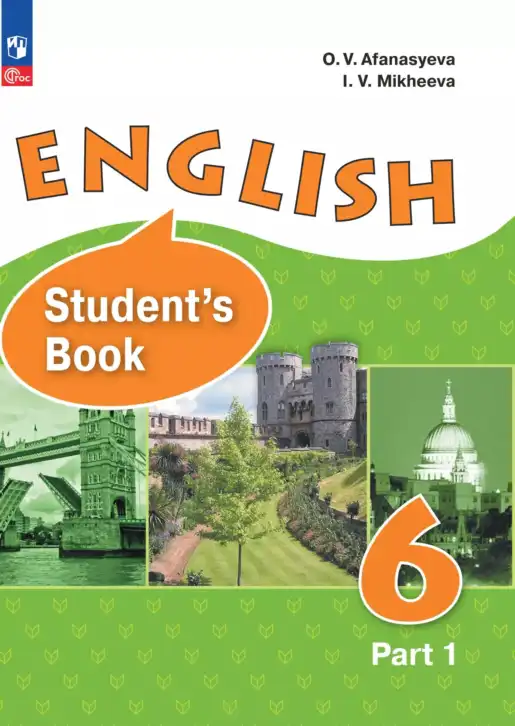
Учебник Английский язык Углубленный уровень для 6 класса от автора О.В. Афанасьевой и И.В. Михеевой – это популярное пособие, входящее в линейку УМК «Rainbow English». Он предназначен для детей, только начинающих изучать английский, и помогает сделать первые шаги в языке увлекательными и эффективными.
ГДЗ по Английскому языку 6 Класс Часть 1 Страница 38 Углубленный Уровень Афанасьева, Михеева — Подробные Ответы
Listen to the poem «Dogs», 🎧 12, and learn it by heart.
DOGS
(after Ogden Nash)
The dog is man’s best friend.
He has a tail on one end.
Up in front he has teeth.
And four legs underneath.
Dogs like to bark.
They like it best after dark.
A dog that is indoors
Wants to be outdoors.
But let him out — and what then?
He wants to be in again.
Dogs cheer up people who are frowning1
And rescue2 people who are drowning.3
Dogs in the country have fun.
They run and run and run.
But in the city this species
Is walked around on leashes.4
Dogs are friendly, loyal and honest.
Of all the pets I like them most.
Послушайте стихотворение «Собаки» и выучите его наизусть.
Перевод
СОБАКИ (Огдена Нэша)
Собака — лучший друг человека.
У него есть хвост.
Спереди у него есть зубы.
И четыре ножки.
Собаки любят лаять.
Им больше всего нравится это делать после наступления темноты.
Собака, которая находится в помещении,
Хочет быть на свежем воздухе.
Но выпусти ее — и что тогда?
Она хочет снова в дом.
Собаки подбадривают людей, которые хмурятся,
И спасают тонущих людей.
Собаки на даче развлекаются.
Они бегают, и бегают, и бегают.
Но в городе эту породу выгуливают на поводках.
Собаки дружелюбны, преданны и честны.
Из всех домашних животных они мне нравятся больше всего.
SFA a) Read the text and choose the title that suits it best. Say why many species of animals and plants are endangered.
a) Endangered Species
b) Natural World in Danger
c) Destroyed Forests
You have never seen a dodo. Your friends and teachers have never seen a dodo. The last of these large birds that couldn’t fly died many years ago. Now it is extinct. We even say «as dead as a dodo», which means «finished». Your great-grandparents may just have seen a passenger pigeon:⁵ the last one died in 1914. A lot more endangered species — fish, reptiles, insects, birds, mammals — may disappear before you have children. The reason is that Man kills animals and destroys their habitats.
13. It is not just animals that are in danger. So are plants. The world had over nine million sq.¹ km of forests. This is a lot of trees, and also a lot of different species of trees. But they are disappearing fast. Every day we use paper and cardboard, both made from wood. We use different kinds of wood in furniture and in other ways. Every year over 100 000 sq. km of forests are cleared for different uses, and a lot of forests are so badly damaged that they will hardly be able to recover. If we go on like this, by the time you are as old as your grandparents are now all the forests on earth can be destroyed. This includes rainforests in South America, Africa and Asia. The huge forests help to control the world’s weather and to produce much of the oxygen in the air. There are many illnesses which we still cannot cure. There are old ones like cancer² and new ones like AIDS.³ It may be that the medicines we need will be discovered in wild plants in savannas, deserts or rainforests. If we destroy these places, we will never find the cure. So you see that it is not just children who need a healthy space to live and grow. If we want our lives to be healthy and interesting, a lot of other creatures and plants need growing space too.
b) Listen to the marked part of the text and try to read it in the same manner.
a) Прочтите текст и выберите название, которое ему больше всего подходит. Скажите, почему многие виды животных и растений находятся под угрозой исчезновения.
a) Исчезающие виды;
б) Мир природы в опасности;
с) Уничтоженные леса.
Перевод
Вы никогда не видели птицу додо. Ваши друзья и учителя никогда не видели додо. Твои бабушка и дедушка никогда не видели додо. Последняя из этих крупных птиц, которая не умела летать, умерла много лет назад. Теперь она вымерла. Мы даже говорим «мертв, как додо», что означает «законченный». Возможно, ваши прадеды и прабабушки только что видели странствующего голубя: последний из них умер в 1914 году. Гораздо больше исчезающих видов — рыбы, рептилии, насекомые, птицы, млекопитающие — могут исчезнуть прежде, чем у вас появятся дети. Причина в том, что человек убивает животных и среду обитания.
В опасности находятся не только животные. Так же и растения. В мире насчитывалось более девяти миллионов квадратных километров лесов. Это множество деревьев, а также множество различных видов деревьев. Но они быстро исчезают. Каждый день мы используем бумагу и картон, изготовленные из дерева. Мы используем различные породы дерева в мебели и в других отраслях. Каждый год более 100 000 кв. км лесов расчищаются для различных целей, и многие леса настолько сильно повреждены, что их вряд ли удастся восстановить.
Если мы продолжим в том же духе, то к тому времени, когда вам будет столько же лет, сколько сейчас вашим бабушке и дедушке, все леса на земле могут быть уничтожены. Сюда входят тропические леса в Южной Америке, Африке и Азии. Огромные леса помогают контролировать погоду в мире и вырабатывать большую часть кислорода в воздухе. Есть много болезней, которые мы до сих пор не можем вылечить. Есть старые, такие как рак, и новые, такие как СПИД. Возможно, необходимые нам лекарства будут обнаружены в диких растениях саванн, пустынь или тропических лесов. Если мы уничтожим эти места, мы никогда не найдем лекарство.
Итак, вы видите, что не только детям нужно здоровое пространство для жизни и роста. Если мы хотим, чтобы наша жизнь была здоровой и интересной, многим другим существам и растениям тоже нужно пространство для выращивания.
Many species of animals and plants are endangered because every year over 100,000 sq. km of forests are cleared for different uses, and a lot of forests are so badly damaged that they will hardly be able to recover. Animals and plants lose their homes and die out.
Лучшее название — b) Мир природы в опасности.
Многие виды животных и растений находятся под угрозой исчезновения, потому что каждый год более 100 000 кв. км лесов вырубаются для различных целей, и многие леса настолько сильно повреждены, что их вряд ли удастся восстановить. Животные и растения теряют свои дома и вымирают.
b) Прослушайте отмеченную часть текста и попробуйте прочитать ее таким же образом.
a)
The best title for the text is b) Natural World in Danger.
Explanation:
The title «Natural World in Danger» is the most appropriate because the text primarily addresses the alarming issue of endangered animal and plant species, and it emphasizes the human activities that contribute to this crisis. The title succinctly captures the central theme of the passage, which discusses how human interference in the natural world — particularly through the destruction of habitats and overexploitation of resources — is causing significant harm to biodiversity. The phrase «Natural World in Danger» effectively summarizes the urgency and severity of the situation outlined in the text, as it points to the broader consequences of these actions on ecosystems and species that depend on them.
The text explores in depth how human activities, which have accelerated at an unprecedented rate, are central to the endangerment of many species. It specifically highlights actions such as deforestation, industrial pollution, overhunting, and climate change — all of which play a role in the rapid decline of species. Deforestation, for example, is not only about the loss of trees but also the destruction of entire ecosystems. When vast areas of forests are cleared for agricultural purposes, urban expansion, or industrial activities, the habitats of numerous species — both plant and animal — are destroyed, leaving them with nowhere to live or thrive. In many cases, these animals and plants cannot simply move to another location or adapt quickly enough, and their populations start to dwindle rapidly.
Furthermore, the text delves into the broader environmental impacts of human-induced climate change, which has created a cascade of disruptions in ecosystems. Rising global temperatures, changing rainfall patterns, and altered seasons are all contributing to the collapse of ecosystems that many species rely on for survival. As a result, species are either forced to migrate to different regions, which may not always be viable, or they face the grim reality of extinction if they cannot adapt in time. For example, many plant species are not able to adjust to the changing climate conditions, and the animals that depend on them for food and shelter suffer as well.
Additionally, illegal hunting and poaching, which are significant drivers of species extinction, are touched upon in the text. Poaching is particularly harmful as it targets specific, often vulnerable species, such as elephants and rhinoceroses. The illegal trade of their tusks and horns has pushed these majestic creatures to the brink of extinction. This form of exploitation, coupled with the habitat destruction and climate change mentioned earlier, exacerbates the threats faced by these animals. Poaching is a persistent issue, and despite the efforts of conservation organizations, it continues to decimate populations of endangered species.
In conclusion, the title «Natural World in Danger» encapsulates the main message of the text: the natural environment and its inhabitants are facing unprecedented threats due to human actions. The title conveys the gravity of the situation — the world’s ecosystems are in peril, and urgent action is required to address the destruction of habitats, the illegal trade in wildlife, and the broader environmental changes that are pushing species toward extinction. The title succinctly emphasizes the need for increased awareness, conservation efforts, and a collective responsibility to protect the Earth’s biodiversity before it is too late. It is a call to action, urging us all to recognize that the natural world is indeed in danger, and it is up to us to help safeguard it for future generations.
b)
Unfortunately, there isn’t enough information provided to fully answer part b of the question, as there is no specific reference to the part of the text that needs to be listened to or analyzed. To fully respond to this question, it would be necessary to listen to the marked or highlighted portion of the text, which is crucial for replicating the same reading style, tone, or manner that is being asked about. The request most likely refers to an audio segment or a specific passage within the text, and without access to that specific material, it’s difficult to mimic the exact tone, speed, or emphasis that was used in the original version.
If you have access to the marked section of the text — perhaps from an audio recording, an excerpt in a textbook, or any other type of material where this part is highlighted — it would be very beneficial to listen closely to how the passage is read. Understanding the nuances of the reading style will help you replicate it effectively. When analyzing how the passage is delivered, there are several important factors to consider, each of which contributes to the overall reading style and the emotions or meaning the text is conveying.
Key factors to keep in mind when listening to the passage and replicating its style include:
- Tone – Pay attention to the tone of the speaker. Is it formal, casual, informative, or conversational? The tone can significantly affect how the information is received by the listener. A formal tone might be used to convey seriousness, while a conversational tone might make the content feel more personal or approachable. Determining the appropriate tone will help guide the manner in which you read the passage aloud.
- Pacing – How quickly or slowly is the passage read? Does the speaker pause for emphasis or rush through certain parts? The pacing of a reading can influence how the audience perceives the message. For instance, a slow pace might be used to emphasize the seriousness of a topic, while a faster pace might convey excitement or urgency. Pay attention to how the speed of the reading changes throughout the passage, especially if the subject matter shifts in intensity or importance.
- Emphasis – Notice which words or ideas are stressed by the speaker. Are certain terms or phrases given more prominence? Emphasis is a powerful tool in communication, and it is often used to draw attention to important concepts or to underline the emotional weight of certain points. For example, when discussing endangered species or environmental threats, the speaker might emphasize certain words like «extinction,» «danger,» or «action» to make the listener focus on the urgency of the issue.
- Emotion – Does the passage invoke any emotions in the reader, and how does the speaker convey this? Is there a sense of urgency or concern, especially when discussing topics such as endangered species, the destruction of ecosystems, or the environmental crises we face? If the text is emotionally charged, the speaker might use a tone that reflects sadness, concern, or even anger. Replicating this emotional delivery is important to ensure that the reading resonates with the listener in the same way it did with the original speaker.
Once you have listened to the audio or carefully read through the marked section, try to replicate these aspects of the reading style in your own rendition. Focus on the tone, pacing, emphasis, and emotion to ensure that your reading matches the intention and style of the original delivery. If you can match these elements effectively, it will demonstrate a clear understanding of how the text is meant to be presented.
If you are still unsure or need further clarification, feel free to share more information about the specific passage or audio you are working with. I’ll be happy to assist you further in analyzing the text or reading style to make sure you are able to replicate it correctly.

Оставь свой отзыв 💬
Комментариев пока нет, будьте первым!