

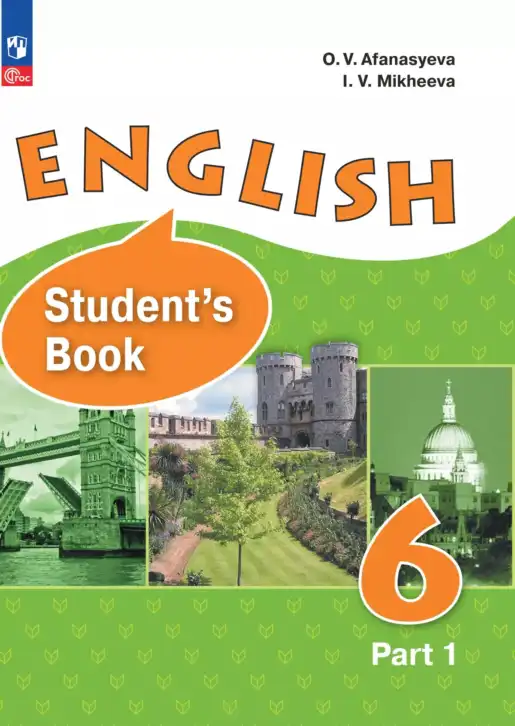
Учебник Английский язык Углубленный уровень для 6 класса от автора О.В. Афанасьевой и И.В. Михеевой – это популярное пособие, входящее в линейку УМК «Rainbow English». Он предназначен для детей, только начинающих изучать английский, и помогает сделать первые шаги в языке увлекательными и эффективными.
ГДЗ по Английскому языку 6 Класс Часть 1 Страница 26 Углубленный Уровень Афанасьева, Михеева — Подробные Ответы
Express the same in English.
a) 1. Анна живёт в Лондоне с 1985 года. Она работает в банке. Она работает там три года.
2. Билл всегда хотел побывать в Брайтоне. Он прочитал много книг об этом курорте (resort).
3. — Семья Браунов ещё не выстроила свой новый дом. — Сколько времени они его строят? — Они строят его уже два года.
4. — Я вас целую вечность не видела. Где вы были? Где вы прятались? — Я пишу книгу о своих путешествиях. Пишу её 1,5 месяца, поэтому живу на даче с мая.
b) 1. — Какая сегодня погода в Лос-Анджелесе? — Солнечно и тепло. Прекрасный день, чтобы поехать на побережье, поплавать и позагорать.
2. — Сколько времени идёт дождь? — Дождь идёт три дня. На улице ветрено, сыро и облачно. У нас осенняя погода.
3. — Какая была погода вчера в Москве? — Шёл снег, было 10 градусов ниже нуля, но было солнечно.
c) 1. Стекло очень хрупкое.
2. Мы сожгли старые листья в саду.
3. Жара имеет (оказывает) пагубное (плохое) влияние на людей.
4. Влияние учителей на учеников велико.
5. Ты когда-нибудь бывал в оранжерее?
6. Ты что-нибудь слышал о парниковом эффекте?
7. Что производит эта фабрика?
8. В Северной Африке более 4000 часов солнечного света каждый год.
9. На побережье достаточно прохладно, правда?
10. Какое влияние имеют климатические изменения на людей?
Выразите то же самое на английском языке.
Ответ:
a) 1. Ann has been living in London since 1985. She works in a bank. She has been working there for three years. (Анна живёт в Лондоне с 1985 года. Она работает в банке. Она работает там три года.)
a) 2. Bill has always wanted to visit Brighton. He has read many books about this resort. (Билл всегда хотел побывать в Брайтоне. Он прочитал много книг об этом курорте.)
a) 3. — The Browns haven’t built their new house yet. — How long have they been building it? — They have been building it for two years. (— Семья Браунов ещё не выстроила свой новый дом. — Сколько времени они его строят? — Они строят его уже два года.)
a) 4. — I haven’t seen you for ages. Where have you been? Where have you been hiding? — I am writing a book about my travels. I have been writing it for 1.5 months, so I have been living at the dacha since May. (— Я вас целую вечность не видела. Где вы были? Где вы прятались? — Я пишу книгу о своих путешествиях. Пишу её 1,5 месяца, поэтому живу на даче с мая.)
b) 1. — What is the weather like in Los Angeles today? — It’s sunny and warm. It’s a beautiful day to go to the coast, swim, and sunbathe. (— Какая сегодня погода в Лос-Анджелесе? — Солнечно и тепло. Прекрасный день, чтобы поехать на побережье, поплавать и позагорать.)
b) 2. — How long has it been raining? — It has been raining for three days. It’s windy, damp, and cloudy outside. We are having autumn weather. (— Сколько времени идёт дождь? — Дождь идёт три дня. На улице ветрено, сыро и облачно. У нас осенняя погода.)
b) 3. — What was the weather like in Moscow yesterday? — It was snowing, it was 10 degrees below zero, but it was sunny. (— Какая была погода вчера в Москве? — Шёл снег, было 10 градусов ниже нуля, но было солнечно.)
c) 1. Glass is very fragile. (Стекло очень хрупкое.)
c) 2. We burned the old leaves in the garden. (Мы сожгли старые листья в саду.)
c) 3. Heat has a detrimental (bad) effect on people. (Жара имеет (оказывает) пагубное (плохое) влияние на людей.)
c) 4. The influence of teachers on students is great. (Влияние учителей на учеников велико.)
c) 5. Have you ever been to a greenhouse? (Ты когда-нибудь бывал в оранжерее?)
c) 6. Have you heard anything about the greenhouse effect? (Ты что-нибудь слышал о парниковом эффекте?)
c) 7. What does this factory produce? (Что производит эта фабрика?)
c) 8. In North Africa, there are more than 4000 hours of sunlight each year. (В Северной Африке более 4000 часов солнечного света каждый год.)
c) 9. It’s quite cool on the coast, isn’t it? (На побережье достаточно прохладно, правда?)
c) 10. What effect does climate change have on people? (Какое влияние имеют климатические изменения на людей?)
Here’s a detailed explanation of each sentence, with an emphasis on the use of tenses and grammatical structures:
a) 1.
Sentence: Ann has been living in London since 1985. She works in a bank. She has been working there for three years.
Explanation:
- Present Perfect Continuous is used to emphasize the ongoing nature of Ann’s residence in London. She moved to London in 1985 and is still living there.
- Present Simple is used for her job because this is a general, ongoing fact.
- Present Perfect Continuous is again used for her work at the bank to indicate that she started working three years ago and continues to work there.
a) 2.
Sentence: Bill has always wanted to visit Brighton. He has read many books about this resort.
Explanation:
- Present Perfect is used to show that Bill’s desire to visit Brighton is a lasting one, starting in the past and continuing up to the present.
- Present Perfect is used again to show that Bill’s reading of books about Brighton has occurred at some point before now, and the exact timing is not important.
a) 3.
Sentence: — The Browns haven’t built their new house yet. — How long have they been building it? — They have been building it for two years.
Explanation:
- Present Perfect is used to express that the Browns haven’t completed building their house yet, implying that the action is still in progress.
- Present Perfect Continuous is used in the second question to highlight the ongoing nature of the building process, showing that it started two years ago and is still happening.
a) 4.
Sentence: — I haven’t seen you for ages. Where have you been? Where have you been hiding? — I am writing a book about my travels. I have been writing it for 1.5 months, so I have been living at the dacha since May.
Explanation:
- Present Perfect is used in the first question to express the fact that the speaker hasn’t seen the other person for a long time.
- Present Perfect Continuous is used to describe the action of writing the book over the past 1.5 months, showing that it is still ongoing.
- Present Perfect Continuous is also used to show that the speaker has been living at the dacha since May, implying that the action started in the past and continues in the present.
b) 1.
Sentence: — What is the weather like in Los Angeles today? — It’s sunny and warm. It’s a beautiful day to go to the coast, swim, and sunbathe.
Explanation:
- Present Simple is used here because it refers to a general truth or current situation regarding the weather, which is sunny and warm.
b) 2.
Sentence: — How long has it been raining? — It has been raining for three days. It’s windy, damp, and cloudy outside. We are having autumn weather.
Explanation:
- Present Perfect Continuous is used to indicate the ongoing action of rain that started three days ago and is still continuing.
- Present Simple is used for general descriptions about the weather.
b) 3.
Sentence: — What was the weather like in Moscow yesterday? — It was snowing, it was 10 degrees below zero, but it was sunny.
Explanation:
- Past Simple is used to describe the weather on a specific day in the past (yesterday), as it is a completed action.
c) 1.
Sentence: Glass is very fragile.
Explanation:
- Present Simple is used to state a general truth or fact about glass.
c) 2.
Sentence: We burned the old leaves in the garden.
Explanation:
- Past Simple is used to describe a completed action in the past (burning the leaves).
c) 3.
Sentence: Heat has a detrimental (bad) effect on people.
Explanation:
- Present Simple is used to express a general truth or scientific fact about the effects of heat on people.
c) 4.
Sentence: The influence of teachers on students is great.
Explanation:
- Present Simple is used to state a general fact about the significant influence of teachers.
c) 5.
Sentence: Have you ever been to a greenhouse?
Explanation:
- Present Perfect is used to ask about an experience at any point in the past.
c) 6.
Sentence: Have you heard anything about the greenhouse effect?
Explanation:
- Present Perfect is used to inquire about whether the person has knowledge or information about the greenhouse effect at any time up to the present.
c) 7.
Sentence: What does this factory produce?
Explanation:
- Present Simple is used here to ask about a general fact regarding the factory’s production.
c) 8.
Sentence: In North Africa, there are more than 4000 hours of sunlight each year.
Explanation:
- Present Simple is used to state a general fact about the sunlight hours in North Africa.
c) 9.
Sentence: It’s quite cool on the coast, isn’t it?
Explanation:
- Present Simple is used to describe the general weather condition on the coast and make a tag question.
c) 10.
Sentence: What effect does climate change have on people?
Explanation:
- Present Simple is used to ask about the general effect of climate change on people.
Read the email from your English pen friend and write your own email to him (around 70 words). Don’t forget to answer his questions. Follow the punctuation rules.
| To: | Andrew |
| From: | John |
| Subject: | Climate Changes |
Dear Andrew, It was nice to get an email from you. We are having wonderful weather these days. Probably you know that our climate has recently changed and we have weather surprises in different seasons. What is the usual autumn weather in the place where you live? Can you say that the climate in Russia has changed or is changing? Are these changes for the better or for the worse? Hope to get a word from you soon.
Take care,
John
Прочитайте письмо от вашего английского друга по переписке и напишите ему свое собственное письмо (около 70 слов). Не забудьте ответить на его вопросы. Соблюдайте правила пунктуации.
Ответ:
To: John
From: Andrew
Subject: Re: Climate Changes
Hi John,
Thanks for your email. In my city, autumn is usually cool and rainy, but we sometimes get a few warm and sunny days. I agree that the climate is changing. Our winters have become milder and there’s less snow than before. I think these changes are for the worse because they can harm the balance of nature.
Write back soon,
Andrew
Перевод:
Кому: Джон
От: Андрей
Тема: Re: Изменения климата
Привет, Джон!
Спасибо за твое письмо. В моем городе осень обычно прохладная и дождливая, но иногда у нас бывает несколько теплых и солнечных дней. Я согласен, что климат меняется. Наши зимы стали мягче, и снега выпадает меньше, чем раньше. Я думаю, что эти изменения к худшему, потому что они могут нарушить природный баланс.
Пиши скорее,
Андрей
Here is a more detailed explanation of the email:
To: John
From: Andrew
Subject: Re: Climate Changes
1. Greeting and Acknowledgment of the Previous Email
The email starts by thanking John for his previous message. This polite acknowledgment creates a connection and shows appreciation for the conversation.
2. Description of the Local Climate
Andrew describes the climate in his city during autumn, specifically pointing out the general weather conditions of being cool and rainy. He also mentions that, occasionally, the weather can be warm and sunny. This part provides John with some context about the local climate, which helps continue the conversation about climate change.
3. Agreement on Climate Change
Andrew agrees with John’s statement that the climate is changing. He mentions that winters in his city have become milder and that there is less snow than in the past. This part of the email connects directly to John’s concern about climate change and provides a personal perspective from Andrew’s own experience.
4. Opinion on the Changes
Andrew expresses concern about the changes in the climate, indicating that these changes are negative because they can disrupt the natural balance. This shows Andrew’s understanding of the potential impacts of climate change on the environment and emphasizes his opinion on the issue.
5. Invitation to Respond
The email ends with an invitation for John to share his thoughts on the subject, encouraging further communication. By expressing curiosity about John’s opinions, Andrew keeps the conversation open and friendly.
6. Closing Remarks
The closing phrase «Take care» is casual and friendly, maintaining the conversational tone of the email.
Summary of the Message:
In this email, Andrew responds to John’s concerns about climate change. He explains the typical weather in his city during autumn, shares his agreement that the climate is changing (with milder winters and less snow), and expresses worry about the negative effects of these changes. The email is polite, thoughtful, and encourages continued dialogue on the topic.


Оставь свой отзыв 💬
Комментариев пока нет, будьте первым!