

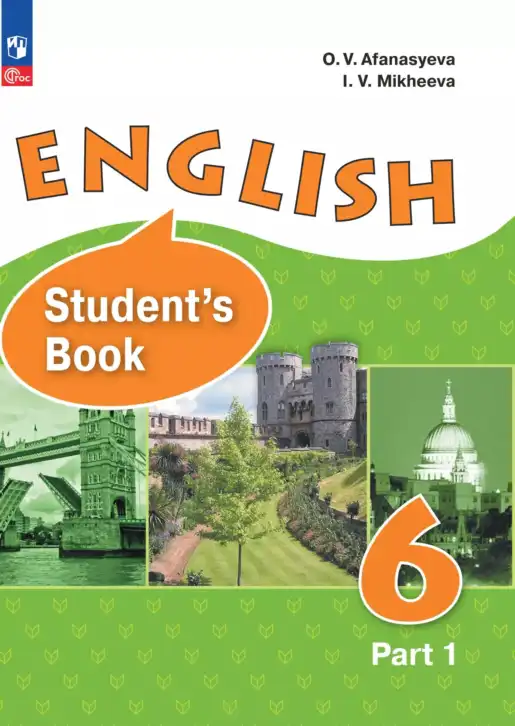
Учебник Английский язык Углубленный уровень для 6 класса от автора О.В. Афанасьевой и И.В. Михеевой – это популярное пособие, входящее в линейку УМК «Rainbow English». Он предназначен для детей, только начинающих изучать английский, и помогает сделать первые шаги в языке увлекательными и эффективными.
ГДЗ по Английскому языку 6 Класс Часть 1 Страница 105 Углубленный Уровень Афанасьева, Михеева — Подробные Ответы
Listen to the dialogue, 🎧 33, read it out loud and say what the Queen usually does with her presents. Act the dialogue out.
QUEEN’S PRESENTS
Olga: What’s that, Stephen? Have you got a new camera?
Stephen: Yeah.1 Just what I’ve always wanted. It’s a Christmas present from my parents.
Olga: Really? I’m so happy for you. I love presents. I wish I were a queen, then I would get2 presents every day.
Stephen: Believe it or not, Olga, but this is what happens in real life. I’ve read in a magazine that for Queen Elizabeth, for example, every day was Christmas day.
Olga: You’re kidding!3
Stephen: Not at all. And some of the presents are very unusual. Once an American hot dog firm sent her a big box of hot dogs with mustard.
Olga: Oh, no! What did she do with them?
Stephen: I have no idea. But it’s clear that presents can be a big problem. Once, when the Queen returned from Canada, she brought home a mink coat,4 a large statue of a horse, a pair of snowshoes, a motorboat, a piece of iron, a silver jug5 and a large painting of a power station.
Olga: What did the Queen do with these presents? Where could she put a large statue?
Stephen: There are 600 rooms in Buckingham Palace and the Queen tried to use all of her presents. And she gave many of her presents to museums, especially the British Museum.
Olga: I’d so much like to go to London one day and visit the British Museum and see Buckingham Palace and Hyde Park and Big Ben.
Stephen: I hope your dream will come true.
Послушайте диалог, прочитайте его вслух и скажите, что королева обычно делает со своими подарками. Разыграйте диалог.
Подарки Королевы
Ольга: Что это, Стивен? У тебя новая камера?
Стивен: Да. То, что я всегда хотел. Это рождественский подарок от моих родителей.
Ольга: Правда? Я так за тебя рада. Я обожаю подарки. Хотела бы я быть королевой, тогда я бы получала подарки каждый день.
Стивен: Поверь мне или нет, Ольга, но это правда. Я читал в журнале, что для королевы Елизаветы, например, каждый день был Рождеством.
Ольга: Ты шутишь!
Стивен: Совсем нет. И некоторые подарки очень необычные. Однажды американская фирма, производящая хот-доги, отправила ей большую коробку с хот-догами и горчицей.
Ольга: О, нет! Что она с ними сделала?
Стивен: Я не знаю. Но ясно одно, что подарки могут стать большой проблемой. Однажды, когда королева вернулась из Канады, она привезла домой шубу из норки, большую статую лошади, пару снегоступов, моторную лодку, кусок железа, серебряный кувшин и большую картину электростанции.
Ольга: Что она сделала с этими подарками? Куда она могла поставить большую статую?
Стивен: В Букингемском дворце 600 комнат, и королева старалась использовать все свои подарки. Многие из них она передала в музеи, особенно в Британский музей.
Ольга: Я так мечтаю поехать в Лондон когда-нибудь и посетить Британский музей, увидеть Букингемский дворец, Гайд-парк и Биг-Бен.
Стивен: Надеюсь, что твоя мечта сбудется.
Ответ:
The Queen tried to use all of her presents in Buckingham Palace, which has 600 rooms. And she gave many of her presents to museums, especially the British Museum.
Королева пыталась использовать все свои подарки в Букингемском дворце, в котором 600 комнат. И многие из своих подарков она отдавала в музеи, особенно в Британский музей.
Королева Елизавета II действительно получает множество необычных и разнообразных подарков, что делает её жизнь полную сюрпризов. Например, она получает подарки не только от официальных лиц, но и от частных компаний и обычных граждан. Как видно из диалога, её коллекция подарков может быть довольно эксцентричной: от шуб из норки до больших статуй и даже коробок с хот-догами.
Что делает королева с подарками?
Королева старается найти место для всех подарков в Букингемском дворце, который имеет целых 600 комнат. Это помогает ей разместить разные предметы, включая те, которые могут показаться неудобными или громоздкими, как, например, большая статуя лошади. Однако не все подарки остаются в дворце. Многие из них передаются в различные музеи, особенно в Британский музей. Это помогает сохранить историческую ценность предметов и позволяет широкой публике увидеть их. Таким образом, несмотря на большое количество подарков, королева пытается использовать их и сделать доступными для людей.
Реакция королевы на странные подарки
Интересно, что королева сдержанно воспринимает такие подарки, как коробка с хот-догами от американской компании. Хотя её реакции на такие вещи остаются неизвестными, понятно, что она воспринимает такие подарки как часть своего обязательства принимать внимание и добрые намерения людей. И это отличный пример того, как даже необычные или не всегда полезные предметы могут найти свое место в её жизни и царствовании.
Почему Британский музей?
Британский музей стал местом, куда королева отправляла многие из своих подарков. Это не просто важный культурный и исторический центр Великобритании, но и место, где собраны многочисленные артефакты и предметы со всего мира, представляющие ценность для общества. Это показывает, как королева помогает сохранить культурное наследие и отдаёт часть своих подарков, чтобы они были доступны для будущих поколений.
Таким образом, подарки, которые получает королева, становятся частью её наследия, а также частью более широкой культурной и исторической значимости для страны.
Queen Elizabeth II indeed receives many unusual and diverse gifts, making her life full of surprises. For example, she receives gifts not only from officials but also from private companies and ordinary citizens. As seen from the dialogue, her collection of gifts can be quite eccentric: from mink fur coats to large statues and even boxes of hot dogs.
What does the queen do with the gifts?
The queen tries to find space for all the gifts in Buckingham Palace, which has a total of 600 rooms. This helps her accommodate various items, including those that might seem inconvenient or bulky, such as a large horse statue. However, not all gifts stay in the palace. Many of them are transferred to various museums, especially the British Museum. This helps preserve the historical value of the items and allows the public to see them. Thus, despite the large number of gifts, the queen tries to use them and make them accessible to people.
The queen’s reaction to strange gifts
Interestingly, the queen takes a restrained approach to gifts such as a box of hot dogs from an American company. While her reactions to such things remain unknown, it is clear that she sees these gifts as part of her obligation to accept the attention and good intentions of people. This is a great example of how even unusual or not always useful items can find their place in her life and reign.
Why the British Museum?
The British Museum became a place where the queen sent many of her gifts. It is not only an important cultural and historical center of the United Kingdom but also a place where numerous artifacts and items from around the world, which hold value for society, are gathered. This shows how the queen helps preserve cultural heritage and gives some of her gifts to make them accessible to future generations.
Thus, the gifts received by the queen become part of her legacy, as well as part of the broader cultural and historical significance for the country.
Make sure that you can read these proper names, 34.
Buckingham Palace
Queen Elizabeth II
(the Second)
Trafalgar Square
St. James’s Park [sənt dʒeɪmzɪz ‘pa:k]
Hyde Park (the Park)
Regent’s Park [ˌriːdʒənts ‘pa:k]
London Zoo
Roman Catholic Church
[ˌrəʊmən ˌkæθəlɪk ‘tʃɜ:tʃ]
Parliament
the Crown
the Royal Family
the Church of England
the Spanish Armada [spænɪʃ a:’mɑ:də]
the Royal Albert Hall
the Victoria and Albert Museum
the British Throne
the Mall [mæl]
Убедитесь, что вы можете прочитать эти имена собственные.
- Buckingham Palace — Букингемский дворец
- Queen Elizabeth II (the second) — королева Елизаветы II (вторая)
- Parliament — Парламент
- The crown — Корона
- the Royal Family — Королевская семья
- Trafalgar Square — Трафальгарская площадь
- St. James’s Park — Сент-Джеймсский парк
- Hyde Park (the Park) — Гайд-парк
- Regent’s Park — Риджентс-парк
- London Zoo — Лондонский зоопарк
- Roman Catholic Church — Римско-католическая церковь
- the Church of England — Англиканская церковь
- the Spanish Armada — Испанская армада
- the Royal Albert Hall — Королевский Альберт-холл
- the Victoria and Albert Museum — Музей Виктории и Альберта
- the British Throne — Британский трон
- the Mall — Торговый центр
- Buckingham Palace – This is the official residence and administrative headquarters of the monarch of the United Kingdom, located in London. It is one of the most recognizable landmarks in Britain.
- Queen Elizabeth II (the second) – Queen Elizabeth II was the longest-reigning monarch in British history, serving from 1952 until her passing in 2022. She was the second monarch named Elizabeth.
- Parliament – The legislative body of the United Kingdom, consisting of two houses: the House of Commons and the House of Lords. It is based in the Palace of Westminster in London.
- The crown – Refers to the monarchy as an institution, including the symbol of authority held by the monarch, often represented by a literal crown worn during ceremonies.
- The Royal Family – The family of the reigning monarch, including the queen, her children, grandchildren, and sometimes other relatives. They play an important ceremonial and representational role in the UK.
- Trafalgar Square – A public square in central London, known for the Nelson’s Column at its center, commemorating Admiral Horatio Nelson. It is a major tourist attraction and the site of many public events.
- St. James’s Park – A royal park located in central London, near Buckingham Palace. It is one of the oldest and most famous parks in London, known for its beautiful gardens and wildlife.
- Hyde Park (the Park) – One of the largest and most famous parks in London, known for its Speaker’s Corner and the Serpentine lake. It offers large open spaces and recreational activities.
- Regent’s Park – A large public park in London, famous for its beautiful gardens, the London Zoo, and the Regent’s Canal. It is also home to several important cultural and sporting institutions.
- London Zoo – Located in Regent’s Park, the London Zoo is one of the oldest scientific zoos in the world, home to a wide variety of animals and dedicated to conservation and education.
- Roman Catholic Church – A branch of Christianity, with its origins in Rome. It is led by the Pope, with followers worldwide. In the UK, it is a significant religious institution.
- The Church of England – The established Christian church in England, which is part of the worldwide Anglican Communion. It is headed by the monarch and is the oldest Protestant denomination in England.
- The Spanish Armada – A fleet sent by King Philip II of Spain in 1588 to invade England, which was defeated by the English navy. The event marked a turning point in European history.
- The Royal Albert Hall – A concert hall in London, opened in 1871 and named after Prince Albert, the consort of Queen Victoria. It is famous for hosting music concerts, including the Proms.
- The Victoria and Albert Museum – A major museum in London, named after Queen Victoria and Prince Albert, specializing in art, design, and fashion. It holds an extensive collection of artifacts from across the world.
- The British Throne – The seat of monarchy in the UK, symbolizing the authority and leadership of the monarch. The British throne is one of the oldest and most enduring in the world.
- The Mall – A ceremonial street in London leading to Buckingham Palace. It is often used for royal processions and public celebrations, such as royal jubilees and national events.

Оставь свой отзыв 💬
Комментариев пока нет, будьте первым!